Rodent and pest cleanup can be a small job or a whole-attic project. This page explains each type of service, what the crew does, and what you should get at the end.
Get an email reply about rodent & pest droppings remediation
Send a short message and get an instant email confirmation. A coordinator then replies by email. This form does not send emergency help; call 911 first if anyone is in danger.
Picking the right service for your space
The four services below often overlap. A cabin might need dropping cleanup in the kitchen and a full attic job overhead. A barn might need guano cleanup more than anything else. The crew should explain which parts apply after they look at the space.
Keep in mind that cleanup and pest control are two different trades. One company removes the mess. Another may trap the animals and seal the holes. Some firms do both, so ask up front who handles each part.
The services, one by one
Rodent Dropping Cleanup
Who it is for: Homes, kitchens, garages, sheds, and offices with droppings on floors, shelves, or in cabinets.
The crew keeps people out of the worst rooms until the work begins. They soak droppings and nests with disinfectant and remove them with a filtered vacuum or by hand. Hard surfaces get a second disinfecting pass. Items too soiled to save are bagged and sealed.
What you should get: A list of rooms treated, before and after photos, and advice on sealing entry points so mice don't return.
Attic & Crawl Space Remediation
Who it is for: Homeowners and landlords who found droppings, nests, or urine stains in the attic, crawl space, or under floors.
The crew checks how to get in safely and what gear the heat or tight space calls for. They map where droppings and stains are heaviest. Soiled insulation and nests are removed, and wood surfaces are cleaned and treated. The crew or a pest company then seals the gaps that let animals in.
What you should get: A written summary with photos of the space before and after. You should also get a note on whether new insulation is needed.
Bird & Bat Guano Cleanup
Who it is for: Owners of attics, barns, steeples, porches, and warehouses where birds or bats have roosted.
The crew keeps unprotected people away from the work area. They wet guano and nest debris so dust stays down, then remove it and clean the surfaces underneath. Vents and roof gaps are closed with help from wildlife experts. Bats are removed only by people allowed to do so, since many bats are protected.
What you should get: Photos of cleared areas, a record of how the waste was bagged and removed, and notes on any openings that still need work.
Insulation Replacement
Who it is for: Homes where insulation was soaked or packed with droppings and can't be cleaned.
Before any new insulation goes in, the crew confirms the droppings and nests are gone. Old insulation is removed down to the agreed depth, then the wood underneath is vacuumed and cleaned. The space is checked to make sure it is dry and free of new rodent signs. Then an insulation installer puts in the new material.
What you should get: Photos of the clean, empty space before new insulation goes in, and separate bills for removal and new insulation.
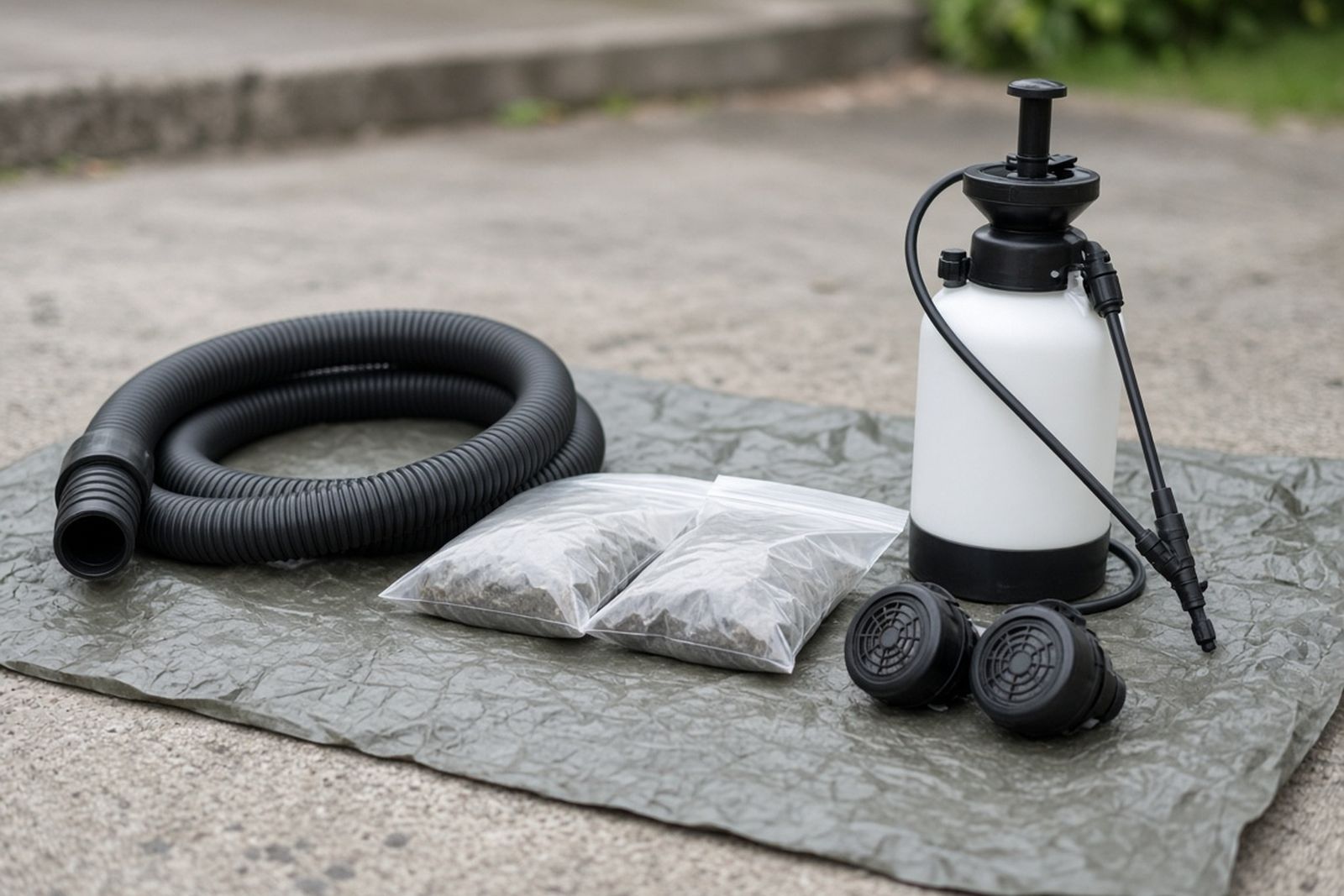
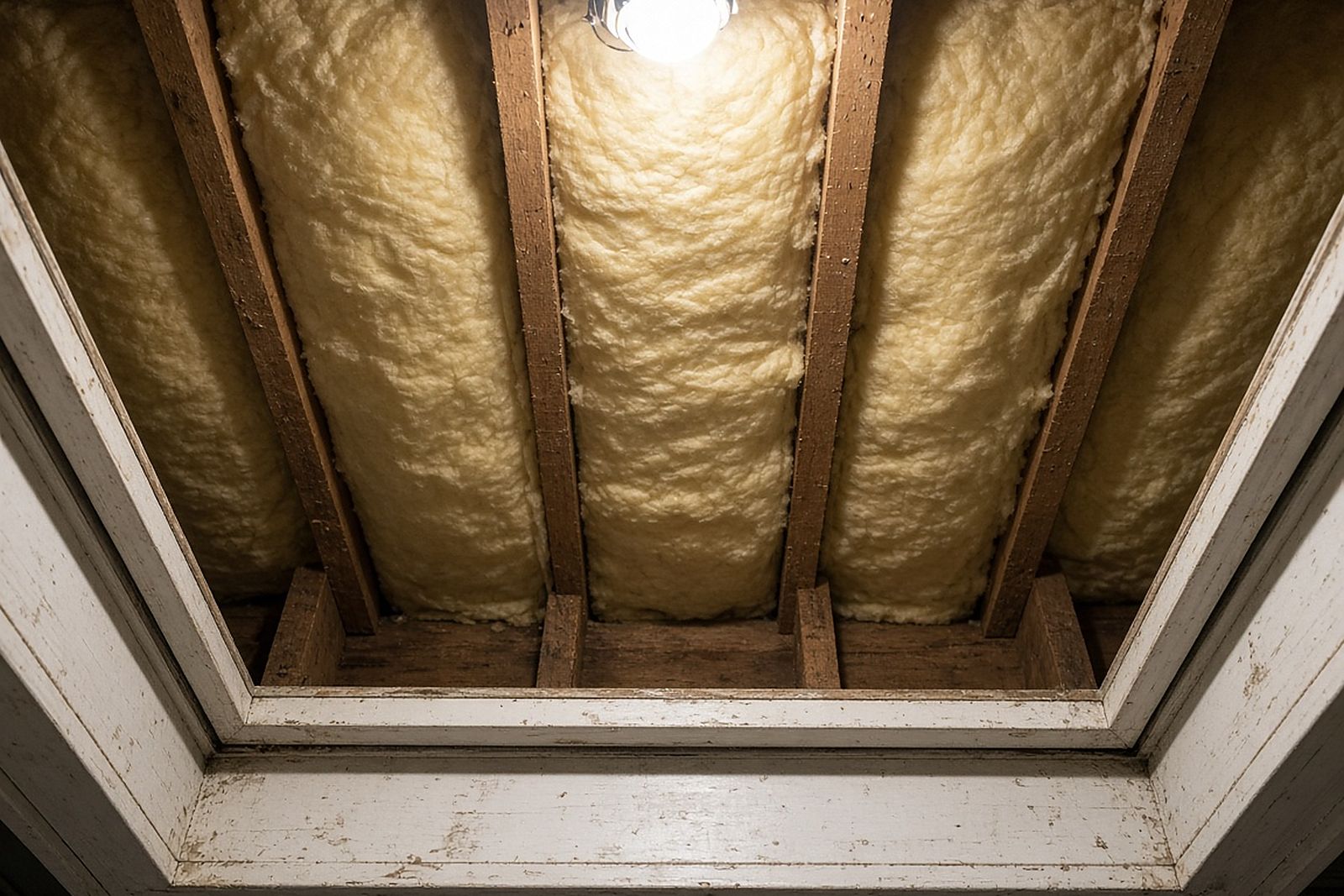
Illustrative photo, not a job record. Vacuum hose, sealed bags, a pump sprayer and respirator cartridges on a tarp.Illustrative photo, not a job record. Attic with new insulation installed between the rafters, seen from the hatch.
Rodent & Pest Droppings Remediation in numbers
$395
Professional rat extermination costs an average of $395, with most homeowners paying between $189 and $655, according to HomeAdvisor cost data.
Read with care: Covers extermination only; contamination cleanup, exclusion sealing ($200-$600), and insulation replacement are priced separately.
Source: HomeAdvisor (2026)United States, HomeAdvisor member project cost data, updated June 2026
1:9 bleach, 5 minutes
CDC recommends disinfecting rodent droppings and urine with a solution of 1 part bleach to 9 parts water (1.5 cups per gallon) or an EPA-registered disinfectant, soaked for 5 minutes.
Read with care: Bleach solutions must be mixed fresh and used with ventilation; commercial disinfectants have their own label contact times.
Source: CDC (2024)United States public-health guidance for household rodent cleanup
$1.50 per sq ft
Attic cleaning costs most homeowners about $438, and rodent decontamination adds roughly $1.50 per square foot plus about $200 to deodorize and disinfect, per Thumbtack data.
Read with care: Marketplace averages vary widely by attic size, contamination level, and whether insulation must be removed.
A national survey of 831 U.S. homes found detectable mouse urinary protein allergen in 82 percent, and elevated levels nearly doubled asthma risk among allergic residents.
Read with care: Detectable allergen does not mean an active infestation; the survey data were collected in 1998-1999.
These figures are public research and agency data, not this network's own job records. Keep each number with its population, year and limits; none of them predicts cost, timing or outcome at a specific property.
What droppings cleanup does not include
Trapping or killing rodents. A pest control company handles this.
Removing live bats. Call a wildlife control company or your state wildlife agency.
Fixing chewed wires. Hire an electrician, since chewed wires can cause fires.
Medical advice after exposure. Talk with your doctor or call your local health department.
Roof or siding repairs. A roofer or general contractor can close larger openings.
After the cleanup is done
A faint musty smell may linger for a few days, especially in attics. If a strong urine smell lasts, there may be soiled wood or insulation that was missed, so call the crew back to look. Keep watching for new droppings, gnaw marks, or scratching sounds. Early signs mean a gap may still be open.
Put your photos, the crew's summary, and the pest control report together in one folder. You will want them if you sell the home, rent it out, or file a claim. If the new insulation is installed later, keep that bill with the rest.
Findings from published studies of people and properties in situations like this one. They describe what researchers observed in a specific group; they are not predictions for your case.
Twelve dwelling/local-area variables explained only part of the observed variation.
Every count is a real visitor vote; nothing is seeded or padded. One vote per poll per device, and you can change your answer.
Your experience
If you found droppings across your attic insulation, what would you most likely do?
No visitor votes yet
Safety
How well do you understand the hantavirus risk from rodent droppings?
No visitor votes yet
Process
When a tenant reports mice and a musty attic smell, what should the landlord be responsible for?
No visitor votes yet
Before you hire: rodent & pest droppings remediation questions
Why does the crew seal the attic off from the rest of the house?▼
Moving old insulation and nests stirs up dust, even when everything is kept wet. Plastic sheeting over the attic hatch and vents keeps that dust in the work area. The crew may also turn off the heating and cooling system so it doesn't pull dust into the ducts. This protects the rooms you live in.
Can a crew clean droppings while we are living in the house?▼
Often, yes. For a closet or pantry, you may just need to stay out of that room. For an attic or crawl space job, the crew may ask you to keep children, older adults, and anyone with breathing problems out of the home that day. Ask the crew what they recommend for your family.
Do guano jobs take special gear compared with mouse droppings?▼
Yes. Large guano piles can hold a fungus that causes lung infections, so workers wear stronger breathing gear and full coveralls. The piles are also heavier and wetter, which means more bags and more haul-away trips. Bats add another step, since some are protected and must be removed by trained wildlife workers.
What happens to the old insulation after it is removed?▼
It is bagged in heavy plastic, sealed, and hauled away. In most places, rodent-soiled insulation can go to a regular landfill once it is bagged. Some areas have extra rules, so check with your local waste office. Ask the crew how they plan to dispose of it and whether the haul-away fee is in the quote.
Can I stay in my home while new insulation is installed?▼
Usually, yes. Installing new insulation is much less messy than removing the old soiled layer. The installer may blow in loose fill or lay down rolls, and dust stays mostly in the attic. Keep the attic hatch closed and pets out of the way. Ask the installer if they need you home.
What if rats chewed through a pipe or wire during the infestation?▼
Call a plumber or electrician first, since leaks and chewed wires can cause bigger damage. Then ask your insurer whether the resulting damage is covered, as some policies pay for sudden water leaks. Photograph the chewed spot before it is fixed. The droppings cleanup can happen after or alongside the repair.
How do I know the cleanup crew and the pest company are working together?▼
Ask each company for its plan and dates in writing. The pest company should finish trapping and sealing before or at the same time as the final cleanup. Otherwise, new mice can soil the clean space. A simple shared schedule helps. Some homeowners ask one company to handle both jobs to keep things simple.