Short answer
No single national certificate covers rodent droppings cleanup. What matters is respirator training and fit testing, hazard and disinfectant training, state pest control licensing when the company also traps, baits, or seals, proof of insurance, and a written job record showing areas treated, products used, material removed, and entry points addressed. Verify local licensing requirements with your state agency.
Is there an official certification for rodent droppings cleanup?
Homeowners often ask for a certificate number the way they might for an electrician. Rodent cleanup does not fit neatly into that model. In most places, no single government license is issued specifically for removing droppings, nests, and contaminated insulation.
Instead, the qualifications that matter are spread across several areas. Workers need training in respiratory protection and safe cleanup methods. Companies that also trap, bait, or apply pesticides usually need a state pest control license. And any provider should be able to show insurance and produce a clear record of what it did.
Some businesses also carry private certificates from training companies or trade groups. Those can signal a commitment to education, but they vary widely in depth. Treat them as a starting point for questions, not proof on their own. Your state's pest control licensing agency can tell you which licenses apply to the specific services being offered.
Why training matters
The risks in rodent cleanup are real, even though serious illness is uncommon. Hantavirus can be severe, and it is only one of several concerns.
Allergens are far more widespread. Mouse urine proteins are a recognized asthma trigger, and careless cleanup can stir them into the air even when no virus is present.
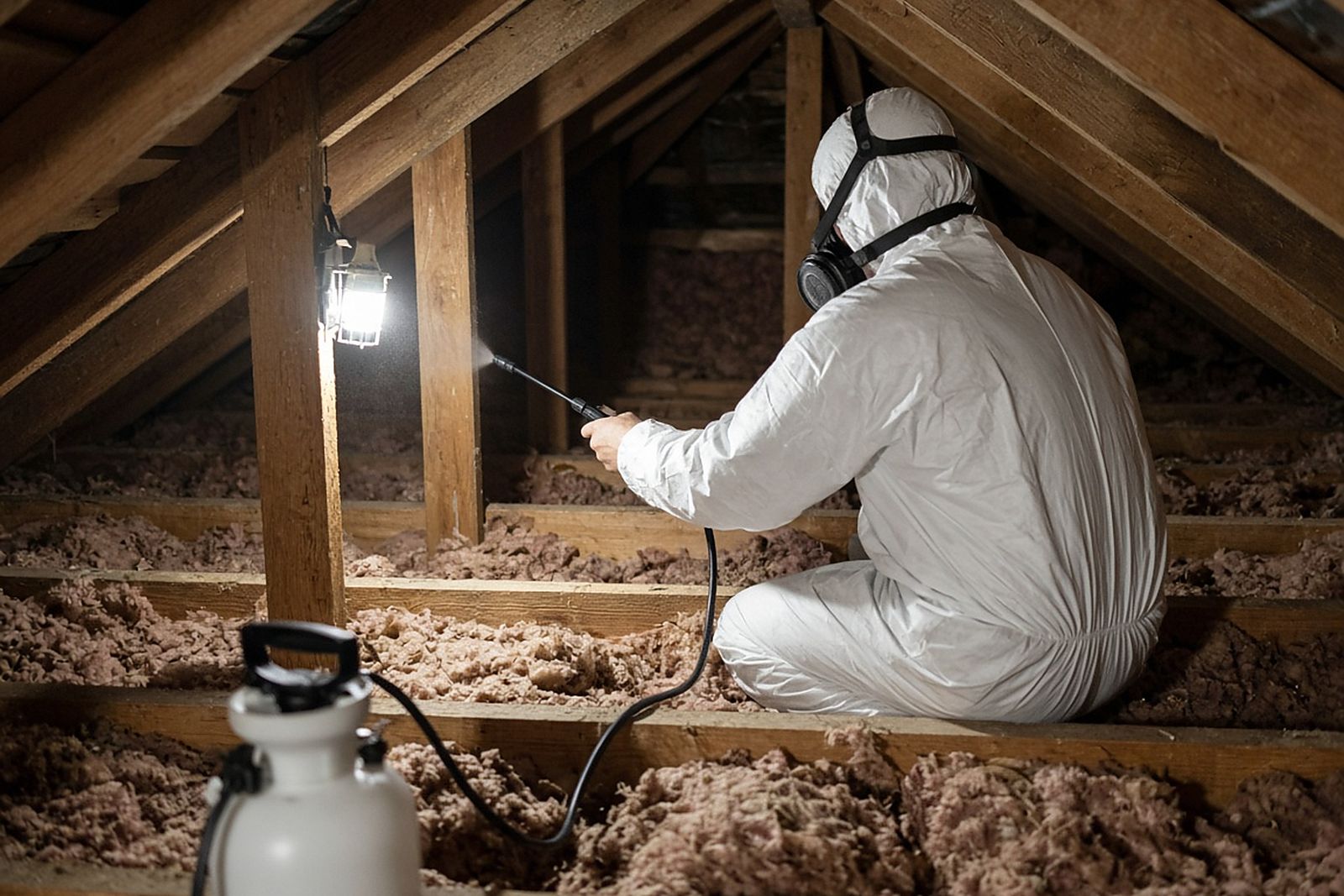
Training is what turns awareness of those risks into safe habits: wetting before removal, controlling dust, wearing the right gear correctly, and keeping contamination from spreading into living areas.
Training also shapes judgment in the moment. An experienced technician knows when to stop and call for more help, such as when a crawlspace turns out to hold dead animals, standing water, or damaged wiring that was not visible during the estimate.
Training technicians should be able to show
Ask for a summary of the training each technician receives before working in a contaminated attic, crawlspace, or outbuilding. A good program covers why droppings are disturbed carefully, how disinfectants work, how to put on and take off protective equipment, and how to handle waste.
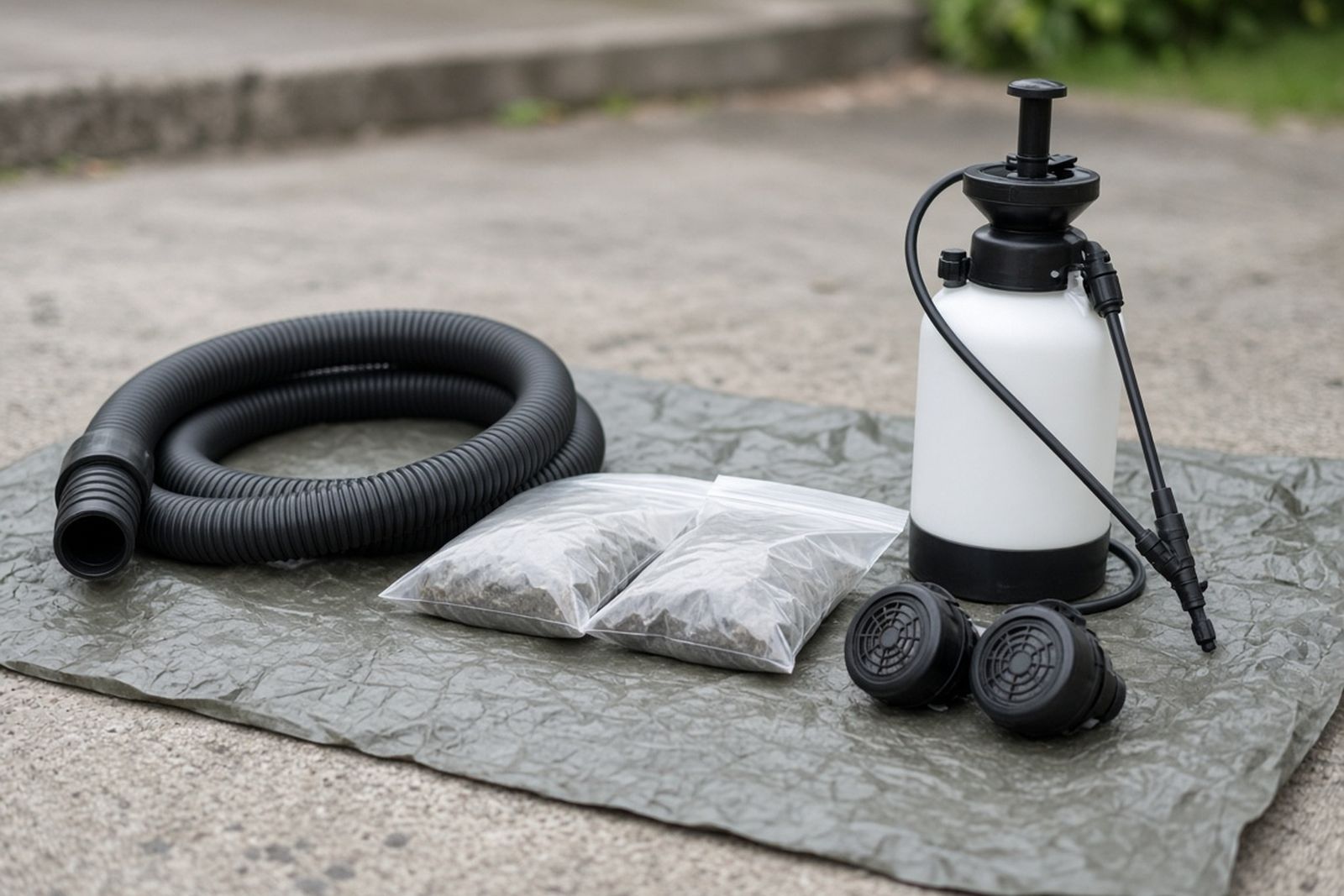
Respirator training deserves special attention. When an employer requires respirators, it generally must run a respiratory protection program that includes medical evaluation, fit testing, and instruction on use and maintenance. A company that hands out respirators without that program is missing a basic piece.
Hazard communication training matters too, because workers handle concentrated disinfectants and sometimes other chemicals. They should know how to read labels and safety data sheets and how to avoid mixing products that react dangerously.
- Respiratory protection program with fit testing and medical clearance.
- Training on wet cleanup methods and dust control.
- Hazard communication for disinfectants and other chemicals.
- Safe removal and bagging of contaminated insulation and nests.
- Confined space awareness for tight crawlspaces, where relevant.
- Heat stress awareness for summer attic work.
Pest control licenses, insurance, and business records
Cleanup and pest control are related but separate. Removing droppings and disinfecting surfaces is one job. Trapping, baiting, and applying rodenticides or other pesticides is another, and it is typically regulated by a state agency that licenses pest control operators and applicators.
Some companies do both under one roof, with licensed applicators on staff. Others focus on cleanup and partner with a licensed pest control firm for trapping and exclusion. Either model can work well. What matters is that whoever handles pesticides holds the license your state requires.
If a company offers to bait or spray as part of the job, ask for its pest control license number and check it with your state's licensing agency. If it does not offer those services, ask who it works with and how the two companies coordinate timing so cleanup happens after activity is controlled.
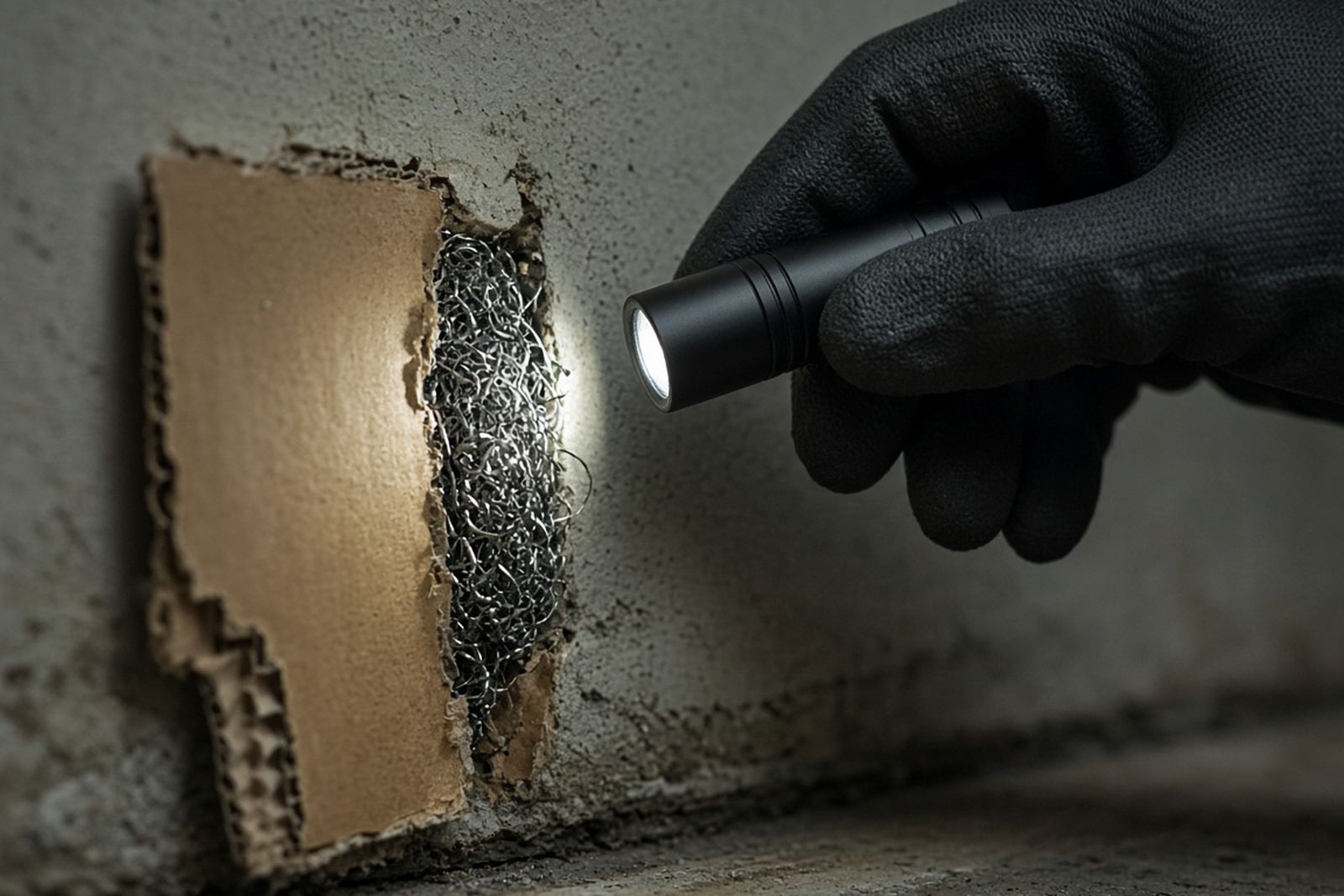
Exclusion work sits in a gray area in some states. Sealing holes with steel mesh, flashing, or hardware cloth may not require a pest license on its own, while combining it with trapping or baiting usually does. Because these lines differ from one state to the next, ask the company to explain which parts of its work are licensed and by whom.
Request current certificates showing both general liability coverage and workers' compensation for the crew who will be in your attic. Attic and crawlspace work carries physical risks, including falls through ceiling drywall, heat illness, and injuries in tight spaces. You do not want those risks to become your liability.
It is also reasonable to confirm the business is registered in your state and to check whether it holds any local contractor license required for insulation or construction work. If the company will remove and replace insulation, that part of the job may fall under different rules than the cleanup itself.
Finally, look at how the company presents its warranty. Exclusion work sometimes comes with a guarantee for a set period. Read what it covers and what it excludes, and keep the document with your job record.
What good documentation looks like
A written job record is one of the most useful things a provider can give you. It shows what was done, supports any warranty on exclusion work, and helps if you sell the home, file a claim, or resolve a dispute with a tenant or landlord.
The record does not need to be long. It should be specific enough that another professional could read it and understand the job.
Ask to see a sample report before you hire. A company proud of its documentation will happily send one with the client details removed. If the sample is a single line on an invoice that reads rodent cleanup, you know what your own record will look like.
- Areas inspected and areas treated, with approximate square footage.
- Before-and-after photos of the main contaminated spaces.
- The disinfectant used, including its EPA registration number, and the contact time followed.
- Material removed, such as insulation, nests, or carcasses, and how it was disposed of.
- Entry points found and how each was sealed, if exclusion was included.
- Recommendations for monitoring or follow-up.
Why does the disinfectant label belong in the paperwork?
Federal law (FIFRA) requires all pesticides, including disinfectants, sold or distributed in the United States to be registered by EPA, according to EPA's 2025 overview. Every registered disinfectant carries a registration number and a label listing the organisms it is tested against, the dilution, and the contact time. Recording that information shows the crew used a real product according to its instructions rather than an unnamed spray.
It also helps you if anyone in the home has sensitivities. You can look up the product's safety data sheet, see what it contains, and ask your doctor about any concerns. For rental properties, it gives the landlord a clear record to share with tenants.
A company that cannot tell you what it plans to use, or that describes it only as its special solution, is not giving you enough information to make an informed decision.
Test the answers in writing
A simple way to compare companies is to email each one the same short list of questions and read the replies side by side. Families with an infant, an older relative, or someone with asthma often find this especially useful, because it lets them judge the answers calmly rather than on a doorstep.
A strong reply is specific. It says technicians complete respirator fit testing and refresher training, names the licensed pest control firm it partners with and gives the license number, names the disinfectant and its contact time, and attaches a sample job report with photos and a map of sealed entry points.
A reply that says only that the company is certified and fully qualified tells you nothing you can check. Keep the stronger reply with your records, too; if a question about the disinfectant comes up later, the label information is already in hand.
Symptom timelines and your job record
Documentation also helps with health questions later. CDC notes that symptoms of hantavirus pulmonary syndrome can take weeks to appear after contact with an infected rodent. If anyone in the home develops fever, muscle aches, or breathing trouble in the weeks after rodent exposure or cleanup, tell a healthcare provider about the rodents and the dates.
A dated job record makes that conversation easier. You can tell the clinician exactly when the attic was disturbed, what was done, and who did it.
Credentials, training, and paperwork are not about bureaucracy. They are how you confirm that the people working above your ceiling understood the risks and handled them properly, and how you keep a clear account of the work long after the crew has gone.