Short answer
Before rodent droppings remediation begins, assess ten risks: airborne particles from dried droppings, direct contact with urine, allergens, confined and overheated spaces, falls through ceilings or from ladders, chewed electrical wiring, disinfectant hazards, dead rodents and parasites, spread of contamination into living areas, and gaps that let rodents return. Each risk points to a specific precaution that keeps workers and occupants safe.
Assess the risks before anyone starts
Rodent cleanups often start with good intentions and a broom. That single choice, sweeping dried droppings, can create the exact exposure the cleanup is meant to prevent. A few minutes of planning before anyone enters the space changes the outcome.
Risks in rodent remediation come from three directions. Some are biological, from what rodents leave behind. Some are physical, from where the work happens, often attics and crawlspaces. And some are chemical, from the products used to disinfect.
The ten risks below cover all three. Use them to judge a provider's plan, or to decide honestly whether a job is small enough to handle yourself.
- 1. Airborne particles from dried droppings and nests
- 2. Direct contact with urine and droppings
- 3. Allergens and asthma triggers
- 4. Confined, hot, or poorly ventilated spaces
- 5. Falls through ceilings or from ladders
- 6. Chewed electrical wiring
- 7. Disinfectant and chemical hazards
- 8. Dead rodents, insects, and parasites
- 9. Spreading contamination into living areas
- 10. Gaps that let rodents return
Risk 1: airborne droppings and nest material
This is the risk that shapes almost every other precaution. When dried droppings, urine, and nest material are disturbed, tiny particles can become airborne and be inhaled. Hantavirus spreads mainly this way.
Hantavirus infections are rare but serious. About 35 percent of hantavirus infections reported to CDC in the United States since 1993 resulted in death, according to CDC's 2024 case data. That severity is why public health guidance is so firm about avoiding dry sweeping and vacuuming.
Controls include ventilating the space before work, soaking all material with disinfectant and waiting the full contact time, lifting material with disposable towels rather than brushes, and wearing respiratory protection for heavy jobs. A crew that plans to sweep or vacuum dry droppings has missed this risk.
Risk 2: contact with urine and droppings
Some rodent-borne infections spread through direct contact rather than breathing. Leptospirosis, for example, spreads through urine and contaminated water or soil entering cuts or mucous membranes. A CDC clinician fact sheet from 2018 notes that roughly 100 to 150 leptospirosis cases are reported in the United States each year, with Puerto Rico reporting the majority.
House mice can carry other viruses too. CDC estimated in 2014 that about 5 percent of house mice across the United States carry lymphocytic choriomeningitis virus. The risk to most people is low, but it is higher for pregnant people and those with weakened immune systems.
Controls are straightforward: gloves, often doubled, eye protection, covering cuts, never touching the face during work, and thorough handwashing afterward. Tell a provider if anyone in the home is pregnant or immunocompromised so they can plan accordingly.
Risk 3: allergens and asthma triggers
Mouse and rat urine contain proteins that trigger allergies and asthma. These allergens settle into dust and fabrics and can linger long after the rodents are gone. Cleanup can temporarily stir them up.
If someone in the household has asthma or allergies, plan for them to be away during work and for containment that keeps dust out of living areas. After cleanup, wet wiping of hard surfaces, laundering fabrics, and HEPA vacuuming after disinfection help reduce allergen levels.
Workers with allergies should also be protected, since repeated exposure can make sensitivity worse over time.
Ask whether the provider will isolate the HVAC system during work. Return air grilles near an attic hatch or a basement can draw allergen-laden dust into the ducts and deliver it to every room. Sealing those grilles temporarily is a simple step with a large payoff for sensitive household members.
Risk 4: confined, hot, or poorly ventilated spaces
Attics and crawlspaces are where rodents often do the most damage, and they are also some of the most hazardous places to work. Attics can become extremely hot, especially in summer, and workers in protective gear and respirators overheat quickly. Crawlspaces are cramped, damp, and sometimes have standing water or low clearance.
Controls include scheduling attic work during cooler parts of the day, planning frequent breaks, keeping water available, using portable lighting, and having a second worker nearby who can help if someone becomes ill. Nobody should work alone in a confined space.
- Schedule attic work for cooler hours.
- Plan breaks and keep water on hand.
- Never work alone in an attic or crawlspace.
Risk 5: falls through ceilings and from ladders
In attics, stepping between joists onto drywall can send a foot or a whole person through the ceiling. Ladders to attic hatches and rooflines add fall risk. Crawl boards laid across joists, careful footing, stable ladders, and a spotter reduce these hazards.
Could rodents have damaged the wiring? (Risk 6)
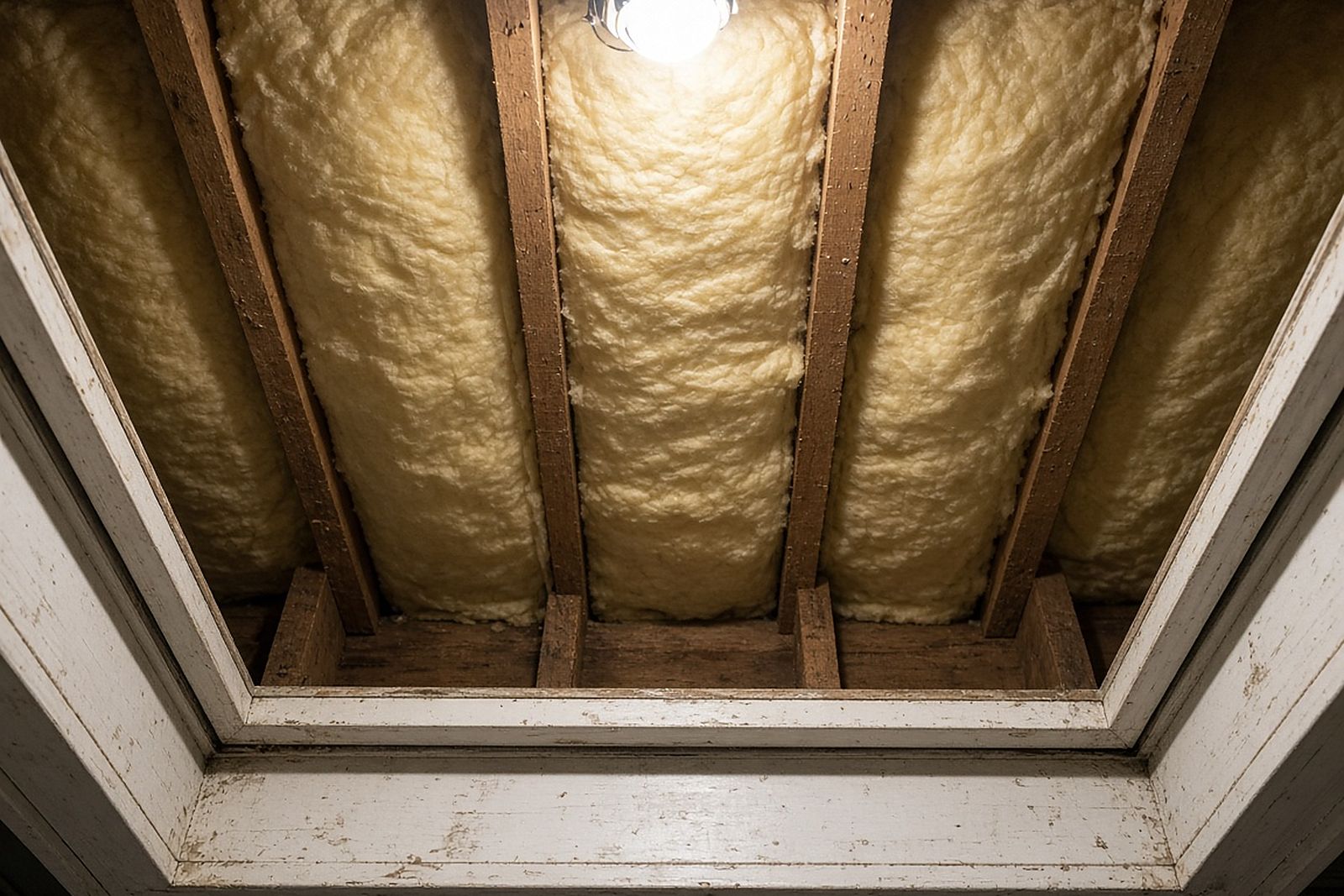
Rodents gnaw constantly, and electrical wiring is a frequent target. Chewed insulation can expose live conductors, creating shock and fire hazards. Damage is often hidden under nesting material or insulation and only becomes visible during cleanup.
Before working in an attic or wall cavity with signs of heavy activity, consider whether power to those circuits should be shut off. Workers should avoid touching wiring, especially with wet gloves or tools.
If chewed wires are found, have a licensed electrician inspect and repair them before new insulation is installed. Your city or county building department can tell you whether the repair needs a permit or inspection.
Gas lines and plumbing deserve a glance as well. Rodents sometimes chew flexible water supply lines and the plastic parts of appliances, and the resulting leaks can create slip hazards, mold, and conditions that attract more pests. Note any damage during the inspection so it can be repaired alongside the cleanup.
Could the cleaning products themselves cause harm? (Risk 7)
Disinfectants protect against pathogens but carry their own hazards. Bleach solutions release fumes in enclosed spaces and should never be mixed with ammonia-based cleaners, vinegar, or acids. Some products can irritate skin, eyes, and lungs.
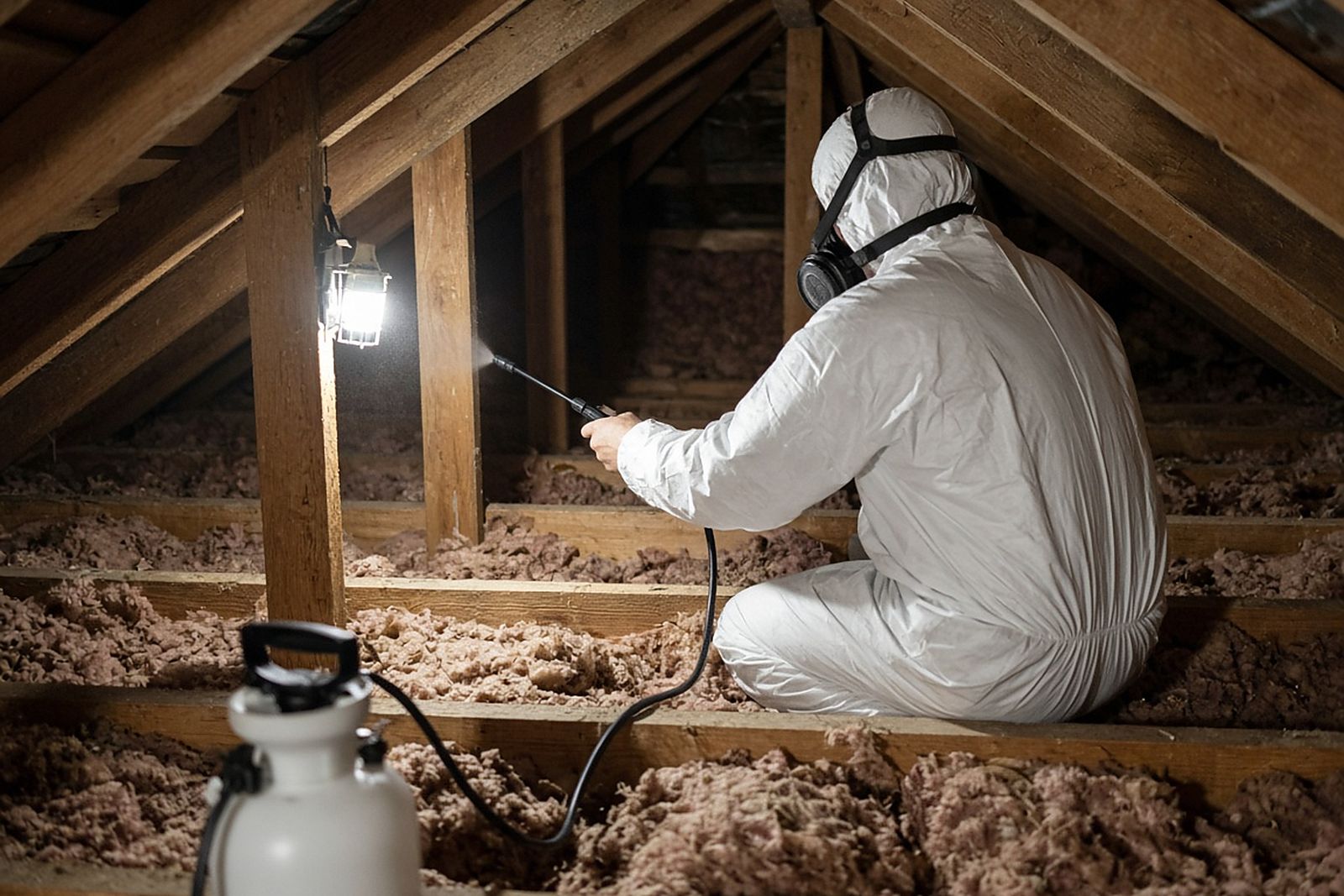
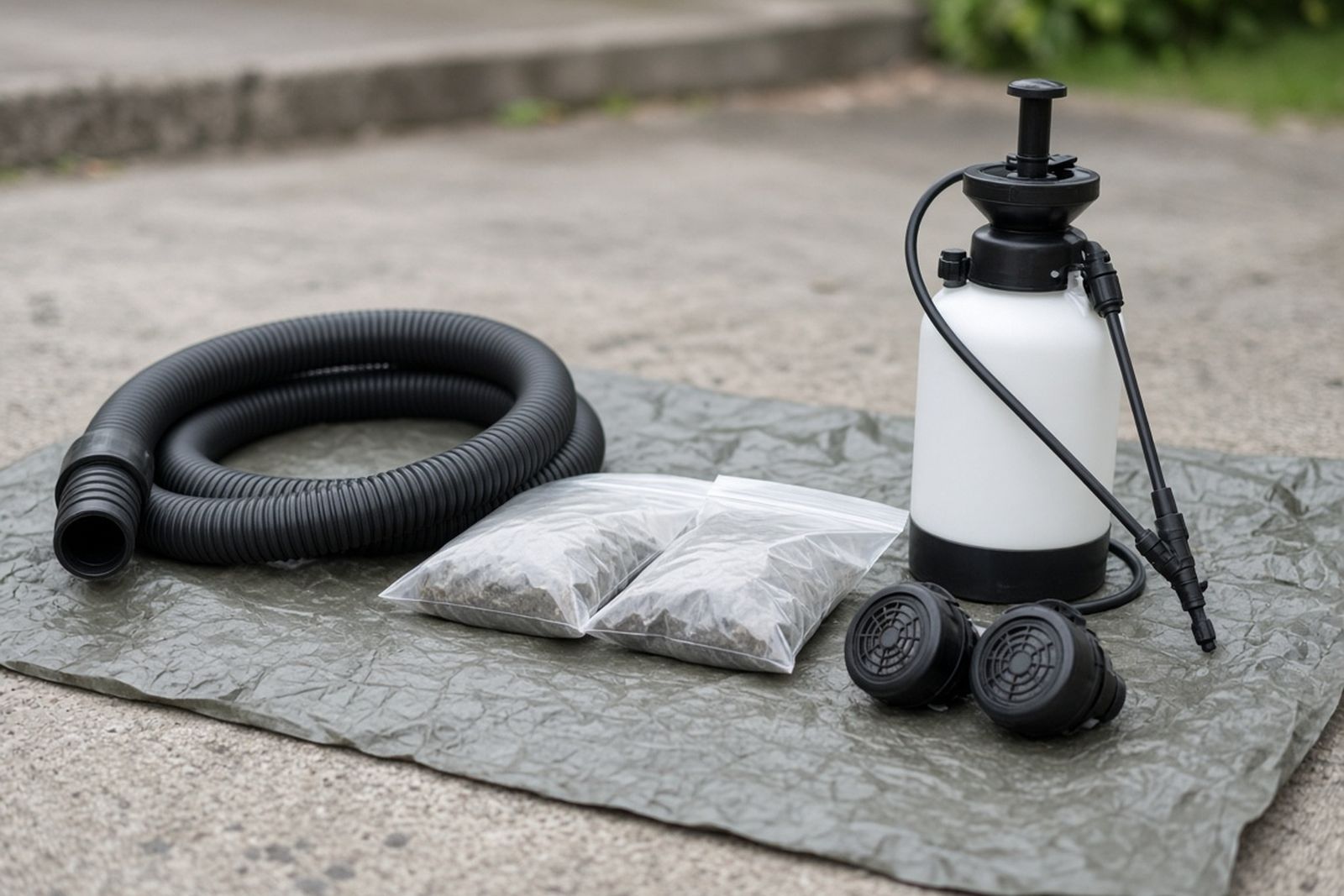
Controls include choosing a registered product appropriate for the surface, mixing and applying it according to the label, ventilating the space, and wearing gloves and eye protection. Applying with a low-pressure sprayer rather than a high-pressure jet reduces both droplet inhalation and the chance of scattering droppings.
Store products safely and keep children and pets out of the area until surfaces are dry and the space is aired out.
Worker health programs matter here. Respirator users should be medically cleared and fit-tested, and anyone doing this work regularly should understand the safety data sheet for each product they use. Ask a provider whether their crew has this training, not just whether they own respirators.
Risk 8: dead rodents and parasites
Dead rodents are the eighth risk. They should be sprayed with disinfectant, lifted with gloved hands or a bag turned inside out, sealed, and disposed of. Carcasses can attract flies and beetles, and rodents may carry fleas, mites, and ticks that leave the body as it cools. Workers should wear full coverage and check themselves afterward.
Risks 9 and 10: spread and recurrence
Spreading contamination is the ninth. Carrying bags through the house, tracking dust on boots, or leaving an attic hatch open can move particles into living areas. Containment at the work area, bagging waste before moving it, boot covers, and a clear exit path address this risk. Turning off the HVAC system during work keeps dust from being drawn into ducts.
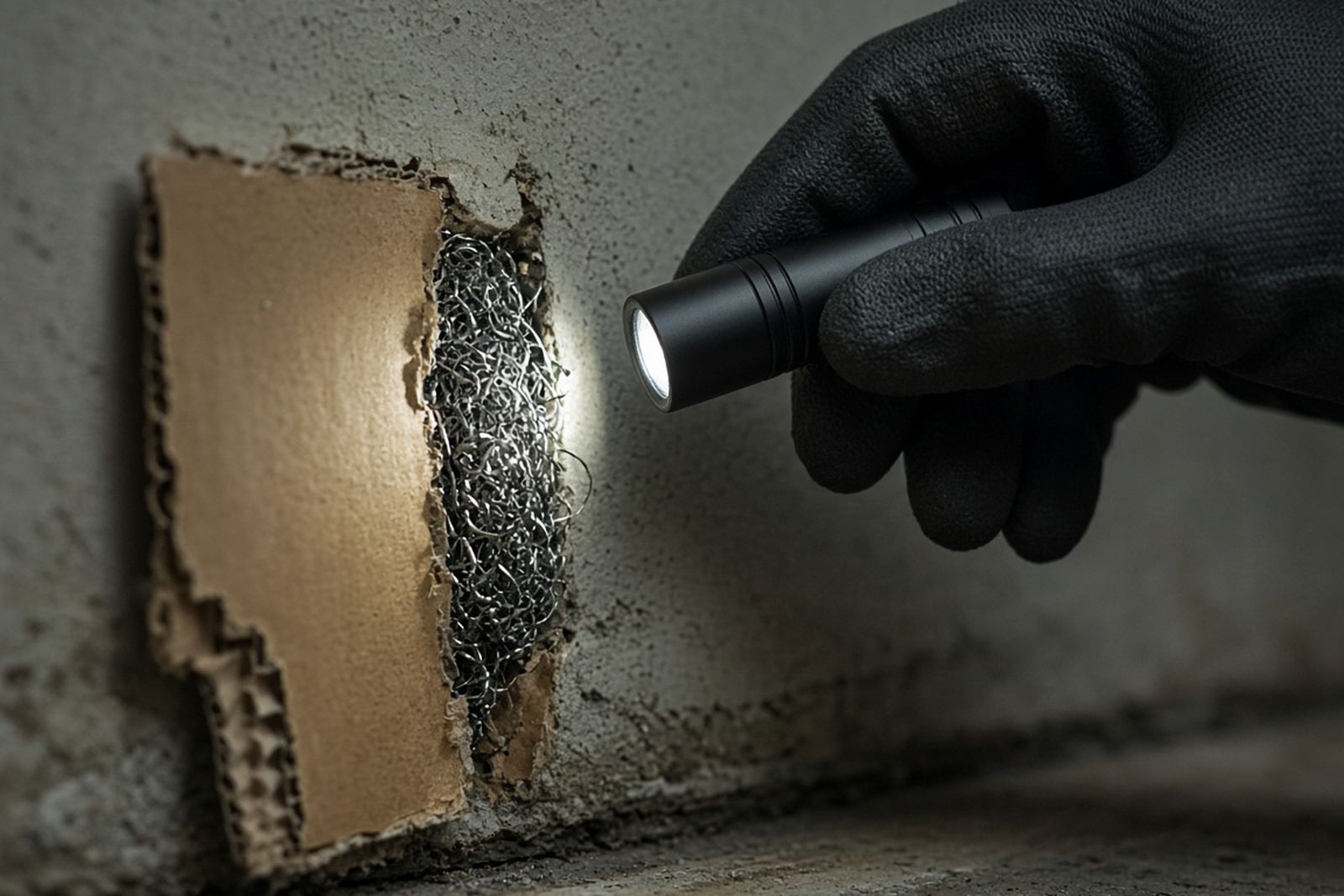
The tenth risk is recurrence. If entry points are not sealed, new rodents will follow scent trails back in and the cleanup will have to be repeated. Exclusion with chew-resistant materials such as metal mesh, hardware cloth, and sheet metal should be part of the plan.
Running the check on a real job
Here is how the check might run on a composite case rather than a real client. You buy a farmhouse that has been vacant for two years. The attic is covered in droppings, there are nests in the insulation, the kitchen smells strongly of urine, and you notice chewed cables near the attic hatch. You are pregnant and planning to move in within a few months.
In this scenario, a provider's risk check would flag airborne particles in the attic, direct contact risk given your pregnancy, heat in the attic, fall risk between joists, chewed wiring, dead rodents likely in the insulation, spread into the living areas below, and many entry points in an older structure. The plan would include keeping you out of the house during work, shutting off the attic circuits, having an electrician inspect the wiring, working in pairs during cooler hours, setting up containment at the hatch, removing the insulation with a sealed system, disinfecting and deodorizing, and sealing the exterior before new insulation goes in.
Each precaution would trace back to one of the ten risks, which is exactly how a well-built plan should read.
If you or anyone involved develops fever, muscle aches, or breathing difficulty in the weeks after exposure, contact a healthcare provider and mention the rodent activity.
The same approach works on a smaller scale. For a single cabinet with a few droppings, running through the ten risks might take a minute and lead to a simple plan: gloves, ventilation, a disinfectant soak, paper towels, and a sealed bag. The list scales to the job.