Short answer
Rodent droppings remediation is shaped by how the hazards move. Viruses such as hantavirus spread mainly when dried urine, droppings, and nest material are disturbed into the air, so professionals soak before they touch anything. Allergens and scent markers soak into porous materials, which is why insulation and nesting areas are often removed. Sealing entry points keeps the cleanup from being undone.
Why are rodent droppings treated as a health hazard at all?
A few mouse droppings in a drawer can seem like a nuisance rather than a hazard. The concern is not the droppings alone but what comes with them. Rodents shed viruses and bacteria in their urine, feces, and saliva, and they leave those materials wherever they travel, nest, and feed.
In North America, the illness that gets the most attention is hantavirus pulmonary syndrome, linked mainly to deer mice and a few related species. Other rodent-associated infections include leptospirosis, which is spread through urine and contaminated water, salmonella from droppings on food surfaces, and lymphocytic choriomeningitis virus from house mice.
Most encounters with droppings do not lead to illness. The goal of good remediation is to keep it that way by controlling the specific routes these organisms use to reach people.
Species matters for the risk picture. Deer mice favor rural and semi-rural buildings such as barns, cabins, and outbuildings, while house mice and Norway rats are more common in towns and cities. A provider who asks where you live and what kind of building is affected is trying to match the precautions to the rodents most likely to be involved.
How hantavirus reaches people, and how long it lasts
Hantavirus is usually inhaled. When urine and droppings from an infected rodent dry out, tiny particles can become airborne if the material is disturbed. Sweeping a shed floor, shaking out a stored blanket, or running a vacuum over a nest can release those particles into the air you breathe.
That is why dry sweeping and vacuuming are ruled out in every sound cleanup plan. The whole professional method is built around one idea: keep the material wet and still until it can be removed.
Less commonly, infection can follow a bite or contact with contaminated material and then the eyes, nose, or mouth. Hand hygiene and gloves address those routes, but the airborne route is the one that drives most of the precautions you will see a crew take.
Survival outside a host depends heavily on conditions. Iowa State University's Center for Food Security and Public Health noted in its 2018 fact sheet that hantaviruses can remain infectious in the environment for a few days to several weeks at room temperature, depending on humidity, organic matter, and sunlight.
Those conditions help explain why closed, dark, rarely used spaces draw so much caution. Cabins, attics, crawlspaces, storage units, and sheds tend to be shaded and still, with nest material and droppings piling up out of sight. Sunlight and airflow, which help break viruses down, are exactly what these spaces lack.
Airing a space out before anyone works in it is a simple first step that reflects this biology. It does not make the droppings safe, but it reduces what may already be suspended in stale air.
Why do professionals soak droppings before removing them?
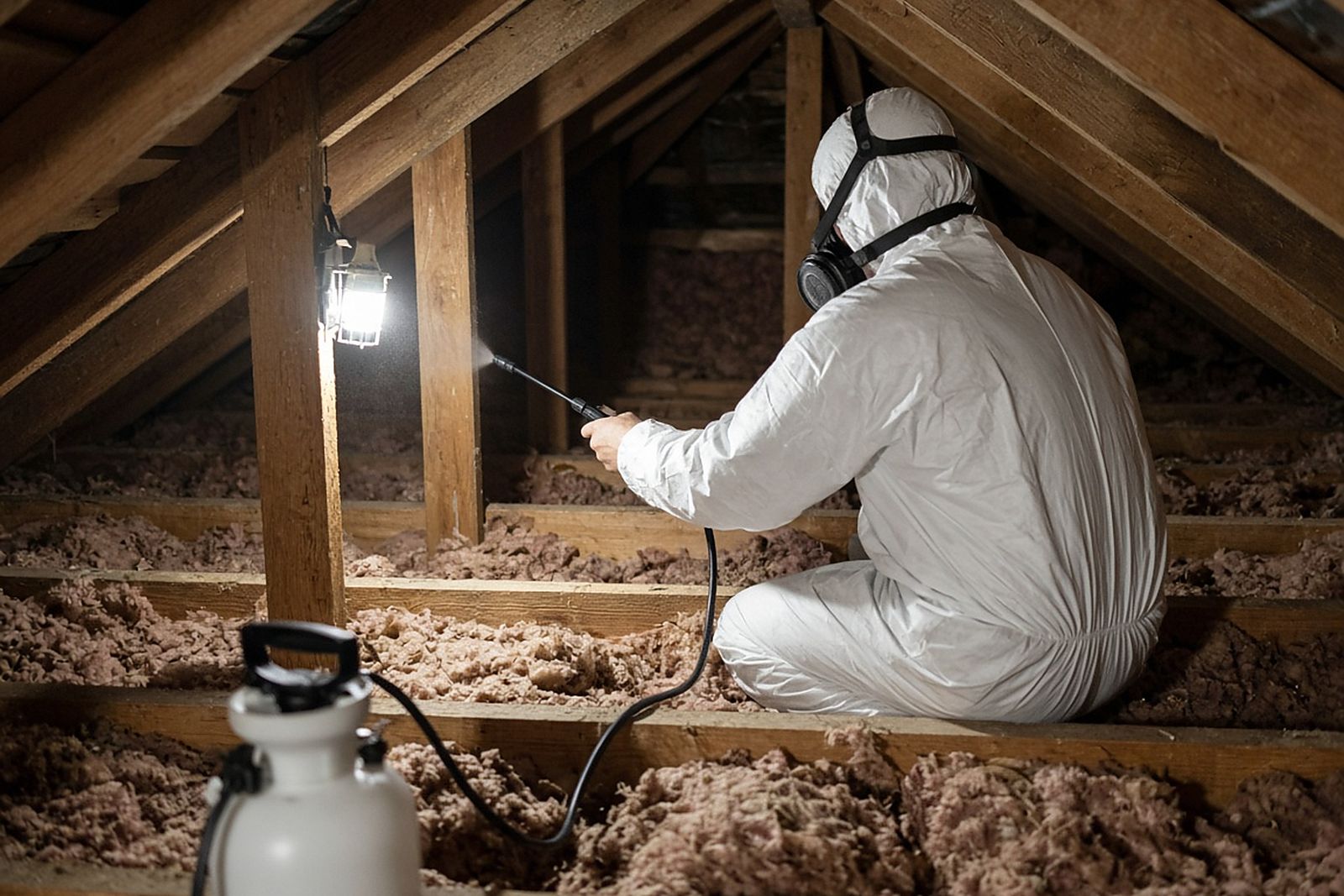
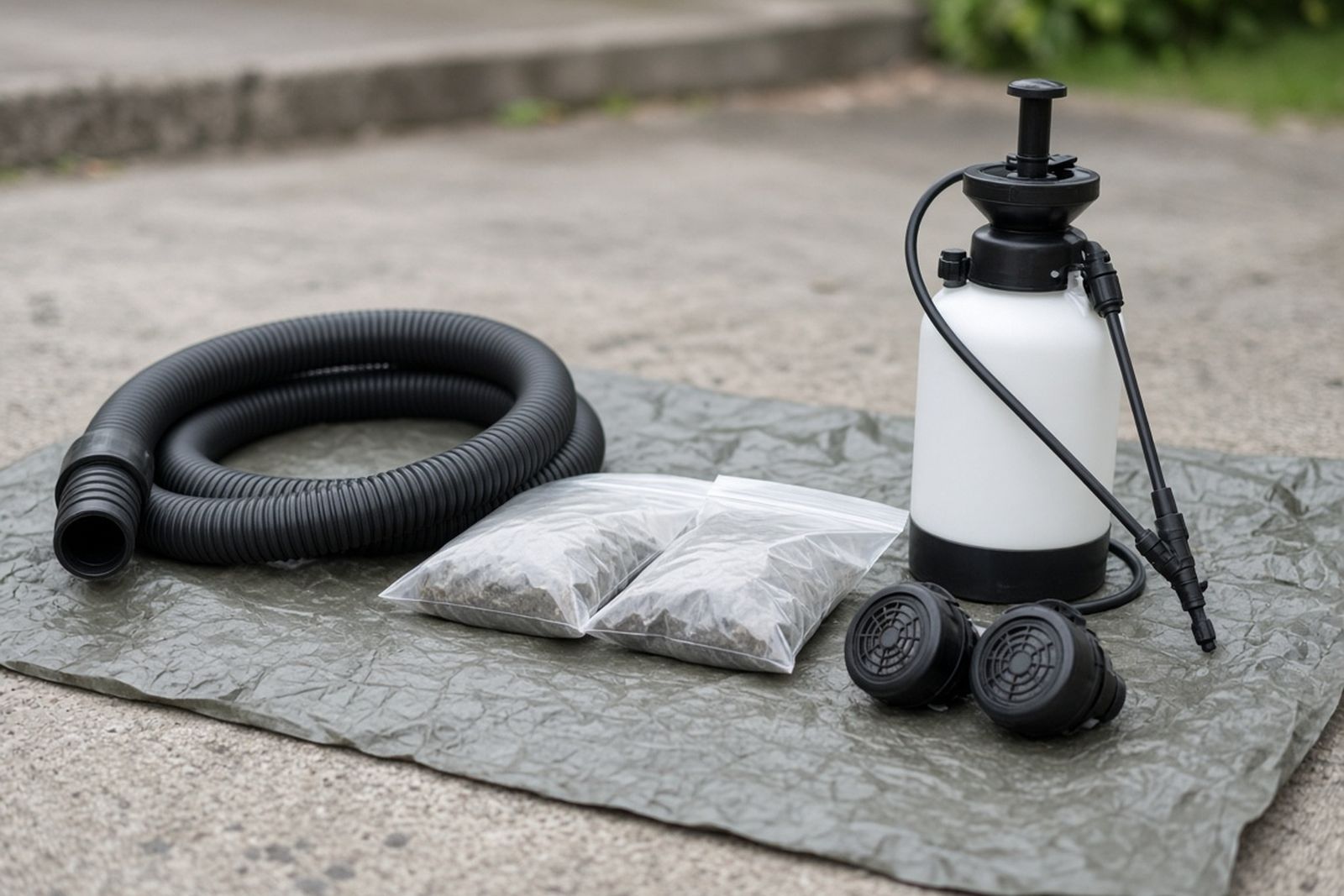
Wetting does two jobs. It weighs down dry particles so they cannot drift, and it gives a disinfectant the wet contact it needs to work, whether that is a properly diluted bleach solution or an EPA-registered product.
The contact time is the part people skip. A disinfectant that dries or is wiped away after a few seconds has not had time to act. Professionals apply enough solution that the material stays visibly wet, wait out the full label time, and then lift the droppings with disposable towels rather than brushes.
Material compatibility matters too. Bleach can discolor fabrics and damage some metals and finishes, so a crew may use a different registered product on certain surfaces. The principle stays the same: saturate, wait, wipe, and bag.
- Ventilate the space before work starts.
- Saturate droppings, urine stains, and nest material with disinfectant.
- Wait the full contact time listed on the product label.
- Lift material with disposable towels and seal it in bags.
- Disinfect the surface again after the visible material is gone.
Insulation, odor, and scent trails
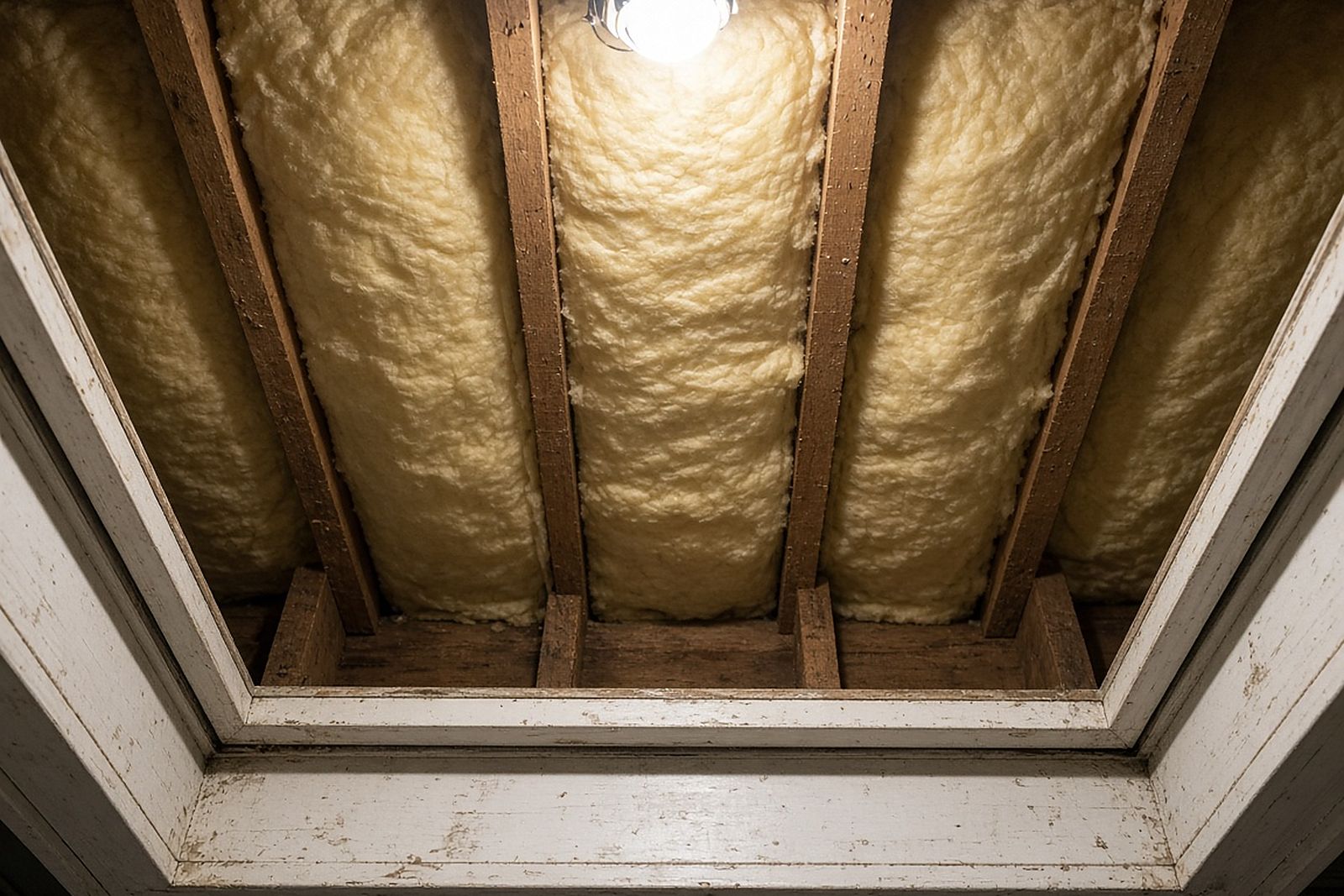
Rodents like insulation because it is warm, soft, and easy to tunnel through. Over time, they nest in it, travel through it, and urinate along the way. Loose-fill and fiberglass batts are built to trap air, which also means they trap droppings and absorb urine throughout their depth.
Surface treatment cannot reach deep into a porous material. Spraying disinfectant onto heavily soiled insulation wets the top layer while leaving contamination below, and the moisture can compress the insulation and reduce its value. In many attics, removal is the more reliable path.
The same logic applies to upholstered furniture, mattresses, cardboard boxes, and stored fabrics that rodents nested in. Hard, nonporous items can usually be cleaned. Soft, absorbent items with heavy nesting are often discarded after being sealed in bags.
There is a structural side as well. Rodents gnaw constantly to keep their teeth in check, and they will chew through wiring insulation, duct wrap, vapor barriers, and soft wood. After removal, a technician often finds damage that was hidden under the nesting layer, which is useful to know before new insulation goes in.
Rodent urine contains compounds that break down over time into sharp, ammonia-like odors. As urine soaks into wood, drywall, and insulation, the smell can persist long after the animals are gone, especially in warm weather when those compounds are released more readily.
Urine also works as a message to other rodents. Mice and rats mark their travel routes, and those scent trails can guide new arrivals along the same paths and into the same entry gaps. A space that has been cleaned but not deodorized can remain more attractive to the next rodent that comes looking.
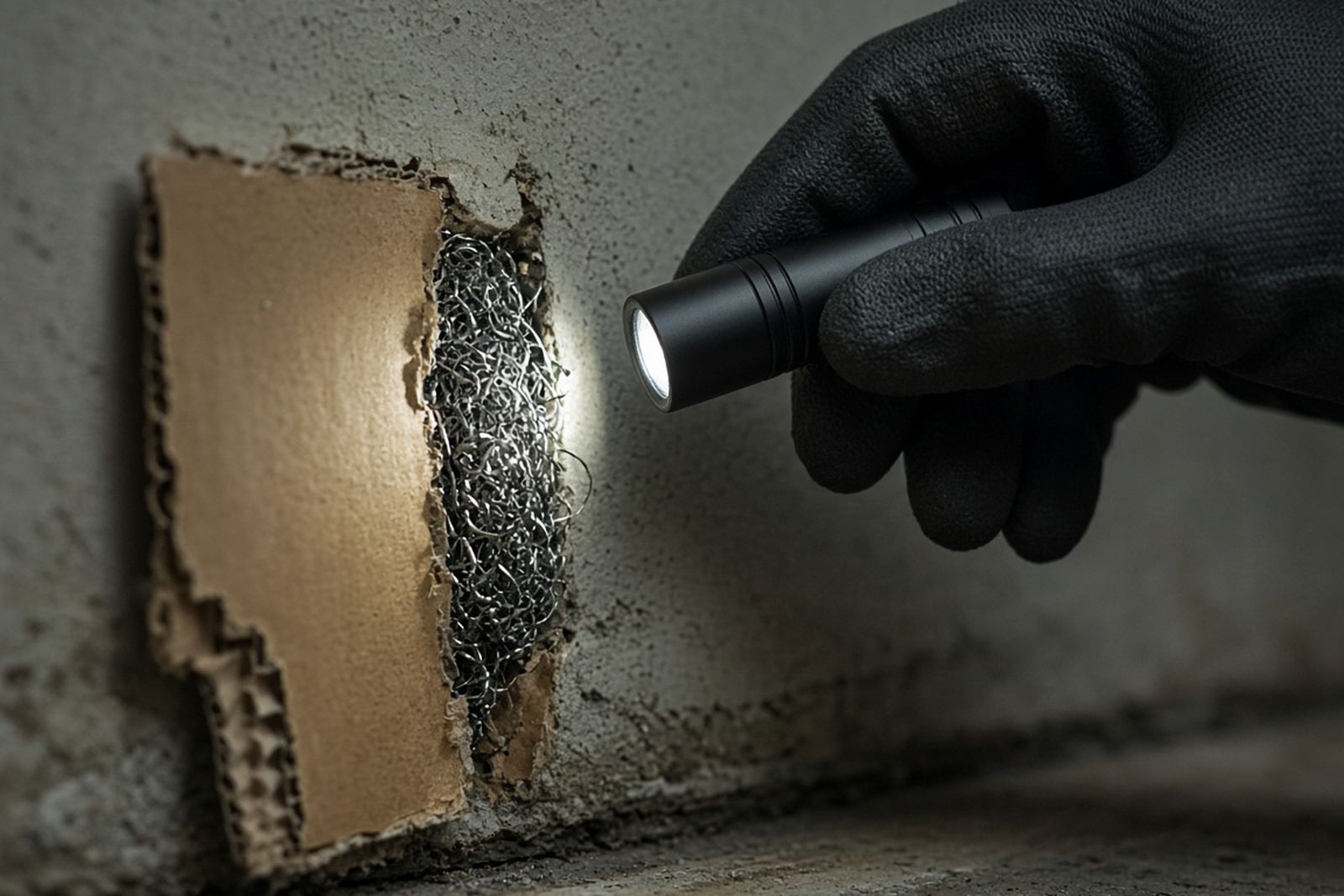
That is why remediation often includes an odor-control step after disinfection, such as enzyme treatments on stained wood or sealing porous surfaces. It is also why exclusion, the sealing of entry points, is part of the job rather than an optional extra.
Dead rodents add another layer. A mouse or rat that dies inside a wall or ceiling produces decomposition odors and can attract flies and beetles. Locating and removing the carcass, then treating the spot, is often the only way that particular smell resolves, and it is a common reason odor returns after a surface-only cleanup.
Allergens and people with asthma
Mouse urine contains proteins that can trigger allergies and worsen asthma, particularly in children. These allergens settle in household dust and can persist after the infestation ends. In a national survey of 831 US housing units, Cohn and colleagues reported in 2004 that 22% had kitchen-floor levels above the study's elevated-concentration threshold. For many families, allergen control is as important as infection control.
The same wet-cleaning methods that control viruses help here. Wiping hard surfaces with damp cloths, laundering washable fabrics on hot settings where appropriate, and using HEPA-filtered vacuums only after droppings have been disinfected and removed can all lower allergen levels over time.
If someone in your home has asthma or a weakened immune system, mention it when you call a provider so they can plan the work and your time away from the space accordingly.
When should you call a professional instead of cleaning yourself?
A few fresh droppings on a kitchen floor can often be handled carefully by a homeowner who follows public health guidance. Heavy infestations, nests in attics or crawlspaces, soiled insulation, confined spaces, and situations involving anyone at higher health risk are better handled by a crew with respirators, containment, and experience.
If you develop fever, muscle aches, or breathing trouble in the weeks after cleaning up after rodents, contact a healthcare provider and tell them about the exposure. Early medical attention matters.
When you do call, give the provider as much detail as you can. Describe where you found droppings, whether you saw nests or dead rodents, how long the space has been closed up, and whether anyone has already tried to clean. Photos taken from a safe distance help a crew plan the right protective gear, containment, and time on site before they ever arrive.