Short answer
ATP testing can be a helpful quality check on hard, sealed surfaces such as kitchen counters, pantry shelving and stainless prep areas after rodent droppings are cleaned. It measures general organic residue, not hantavirus, bacteria or mouse allergen, and it gives meaningless readings on insulation, wood framing or soil. Visual inspection, removal of nests and soiled materials, and exclusion matter more.
How does an ATP swab work on a surface where mice have been?
ATP, short for adenosine triphosphate, is an energy molecule present in living cells and in much of the organic debris they leave behind. Rodent urine, droppings, hair and food crumbs all contribute organic material that can register on an ATP swab.
The technician wipes a measured area, snaps the swab into a reagent chamber and inserts it into a small luminometer. The device reports a number in relative light units. A high reading means more organic residue; a low reading means less. Different manufacturers use different scales, so a result only makes sense alongside the pass level that the device maker recommends.
For rodent work, think of an ATP swab as a flashlight for residue you might not see. It can reveal a shelf that still carries a urine film after the droppings have been wiped away. It cannot tell you what that residue contains.
What an ATP swab cannot measure: germs and allergen
ATP testing does not identify hantavirus, leptospira, salmonella, lymphocytic choriomeningitis virus or any other specific organism. Viruses in particular carry no ATP of their own, so a swab result says nothing direct about whether viral particles remain.
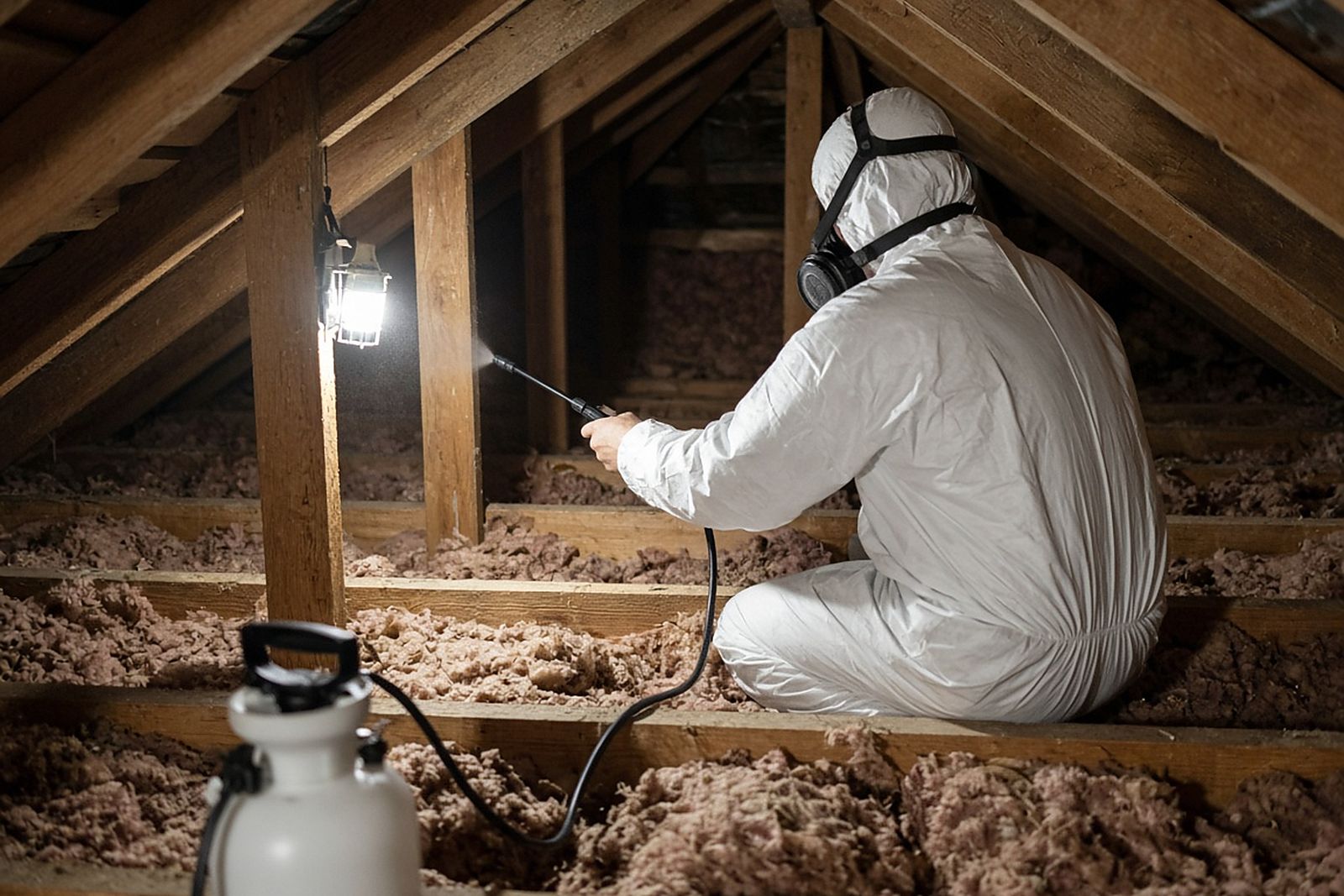
Protection against those hazards comes from the method, not the meter. Crews ventilate, wet everything down with an appropriate disinfectant, allow the full contact time, then remove the material without sweeping or vacuuming. The dilution and contact time on the disinfectant's label are what do the work against germs.
An ATP reading taken afterward can suggest that the cleaning removed organic buildup, which helps a disinfectant work. It is supporting evidence of good housekeeping, not proof of a pathogen-free space.
Not specifically. Mouse allergen is a protein found mainly in rodent urine, and it can persist in dust and on surfaces long after the animals are gone. An ATP swab may pick up some of the same residue, but it does not measure the allergen itself.
This matters for households with asthma or allergies. Environmental Health Perspectives reported in 2009 that, in a national survey of 831 U.S. homes, researchers found detectable mouse urinary protein allergen in 82 percent, and elevated levels nearly doubled asthma risk among allergic residents. If allergy symptoms are the main concern, talk with the person's clinician about whether specific allergen testing of dust makes sense. Those tests are done in a lab, not with a handheld ATP reader.
Practical steps still carry most of the weight: removing droppings and urine-soaked materials, washing hard surfaces, laundering fabrics and keeping rodents out so the allergen load stops building.
Where ATP readings make sense
ATP swabs work best on smooth, sealed, nonporous surfaces that people touch or that contact food. Those are also the surfaces where you most want confidence that residue is gone.
Outside those areas, the readings lose meaning. Attics, crawlspaces and wall cavities are dominated by porous or naturally organic materials that would produce high readings no matter how well they were treated.
- Good candidates: kitchen countertops, pantry and cabinet shelves, stainless prep tables, sealed appliance exteriors, food storage bins and hard-surface flooring.
- Marginal: painted drywall, sealed concrete and laminate, where texture and wear affect the swab.
- Poor candidates: fiberglass or cellulose insulation, bare wood framing, cardboard, soil and crawlspace vapor barriers with debris.
- Not worth testing: materials already scheduled for removal and disposal.
How should a remediation crew build ATP testing into the job?
If a provider uses ATP testing, it should fit into a clear sequence. The crew ventilates the space, wets and disinfects droppings and nests, removes them into sealed bags, removes any materials that cannot be cleaned, then cleans hard surfaces. Swabbing comes after cleaning and before the final disinfection pass, so the result can guide whether a second cleaning is needed.
Readings are most useful when they are paired: a swab before cleaning and one after, from the same marked spot. That comparison shows the effect of the work in a way a single low number cannot.
Ask the crew to record where each swab was taken, the device used and the pass level applied. A reading without that context is hard for you, a food safety inspector or a future contractor to interpret.
Crews should also stay in the protective equipment the job requires while swabbing. ATP work involves leaning close to surfaces that were recently contaminated, so a technician should not drop respiratory protection just because the visible droppings are gone.
Why can a good ATP score still hide a rodent problem?
A clean countertop does not mean the building is clean. Droppings and nests often sit in places a swab never reaches, such as behind the dishwasher, under the bottom drawer of a cabinet, inside the wall where plumbing enters, or in the insulation above a ceiling.
Odor is another clue a swab can miss. A dead rodent in a wall cavity can produce a persistent smell even when every accessible surface reads low. Finding and removing the source is the fix; additional swabbing is not.
The most important check of all is whether rodents are still getting in. If entry points remain open, a perfect ATP score today may be meaningless in two weeks. Look for a pest control report that documents exclusion work alongside any cleaning verification.
Does a low ATP reading mean my family can use the space again?
Deciding when a kitchen, basement or cabin is ready for normal use is a judgment call that rests on several things, and an ATP number is only one of them. It helps to ask what each piece of evidence tells you.
Start with activity. Has pest control confirmed that traps are staying empty and entry points are sealed? If not, the space is likely to be recontaminated regardless of how well it was cleaned.
Next, consider what was removed. If nests, soiled insulation, stained shelving and contaminated stored goods are gone, the largest sources of residue and allergen have left the building. A report that lists those removals tells you more than a column of swab results.
Then look at the finished surfaces. Low readings on counters and shelves after cleaning, taken in the spots that were worst before, are reasonable evidence that the cleaning step was done well. Pair that with a visual walk-through in good light.
Finally, think about the people returning. Anyone with asthma, a weakened immune system or a pregnancy may want to wait until dusty areas have been cleaned thoroughly and aired out. If questions remain about symptoms or risk, a clinician is the right person to ask, not the cleaning contractor.
Illustration: a small cafe after mice in dry storage
A small cafe offers a useful illustration; the details are typical rather than drawn from a specific business. Suppose the owner opens the dry-storage room one morning and finds droppings on the shelving, gnawed flour bags and urine staining on the bottom shelf. The owner closes the room, calls pest control and books a remediation crew.
Next, the pest control operator traps the room and seals a gap where a conduit enters from the alley. Once activity stops, the remediation crew discards all opened and gnawed food packaging, wets and removes droppings, and pulls out a particleboard shelf that is swollen and stained.
The crew swabs the stainless wire shelving, the prep table outside the storage door and the new sealed shelf before and after cleaning. One corner of the wire shelving still reads high after the first pass, so the technician scrubs the joints and swabs again. The report lists every swab location and result, what food and materials were discarded, and the exclusion work pest control completed.
The owner shares that report with the local health inspector, who is more interested in the discarded food and the sealed entry point than in any single swab number.
What should I ask before paying for ATP verification?
ATP testing can add useful accountability when it is used on the right surfaces. A few direct questions will separate a provider who understands its limits from one who is using it as a sales prop.
If a provider suggests that low ATP numbers prove there is no hantavirus or no allergen left, that claim goes beyond what the test can support. Treat it as a reason to keep looking.
- Which surfaces will you swab, and why were those chosen?
- Will I get before and after readings from the same marked spots?
- What pass level applies to your device on these surfaces?
- How will you document areas you cannot swab, such as insulation or wall cavities?
- Who is handling exclusion so the problem does not return?