Short answer
OSHA has no standard written specifically for rodent droppings, but several general rules apply to the workers who clean them. Employers must assess hazards and supply suitable PPE, run a full respiratory protection program when respirators are required, train workers on the disinfectants they use, and address serious recognized hazards such as hantavirus. These duties protect workers; they do not certify your home.
No named standard, but four general rules apply
Not by name. OSHA does not have a rule titled rodent droppings or hantavirus cleanup. That surprises people, because the health concerns around droppings, urine, and nesting material are well documented. The absence of a named standard does not mean the work is unregulated. It means several broader rules apply at once, depending on what the job involves.
It also helps to be clear about who these rules protect. OSHA regulates employers and their employees. If you hire a remediation company, OSHA's requirements govern how that company protects its own crew. They do not certify that your attic is clean, and they do not tell you as a homeowner what you must do in your own garage.
If you are an employer, the picture shifts. A property manager who sends maintenance staff into a crawlspace full of mouse debris, or a farm that assigns workers to clean out a feed shed, may have OSHA obligations of its own. A few states operate their own OSHA-approved programs that go further than the federal rules, and if your workplace is in one of them, the state plan office is the place to ask.
Four areas do most of the work. Together, they cover the main ways a rodent cleanup can harm a worker: breathing contaminated dust, skin and eye contact, chemical exposure from disinfectants, and the physical conditions of the space itself.
Each area carries its own paperwork and training expectations. A provider that knows its obligations should be able to describe how it handles each one without reaching for a script.
- Personal protective equipment: employers must assess hazards, select suitable gear, and train workers to use it.
- Respiratory protection: when respirators are required, employers need a written program with medical evaluation and fit testing.
- Hazard communication: workers must be trained on the disinfectants and chemicals they handle, with safety data sheets available.
- The General Duty Clause: employers must address serious recognized hazards even when no specific standard exists.
- Confined space rules may also apply to some crawlspaces, tanks, and pits, depending on their layout and hazards.
Respiratory protection and what a real program involves
The main hazard in rodent cleanup is what can get into the air. Dried droppings, urine, and nesting material break into fine particles when disturbed. If the rodents carried a virus such as hantavirus, those particles can carry it too.
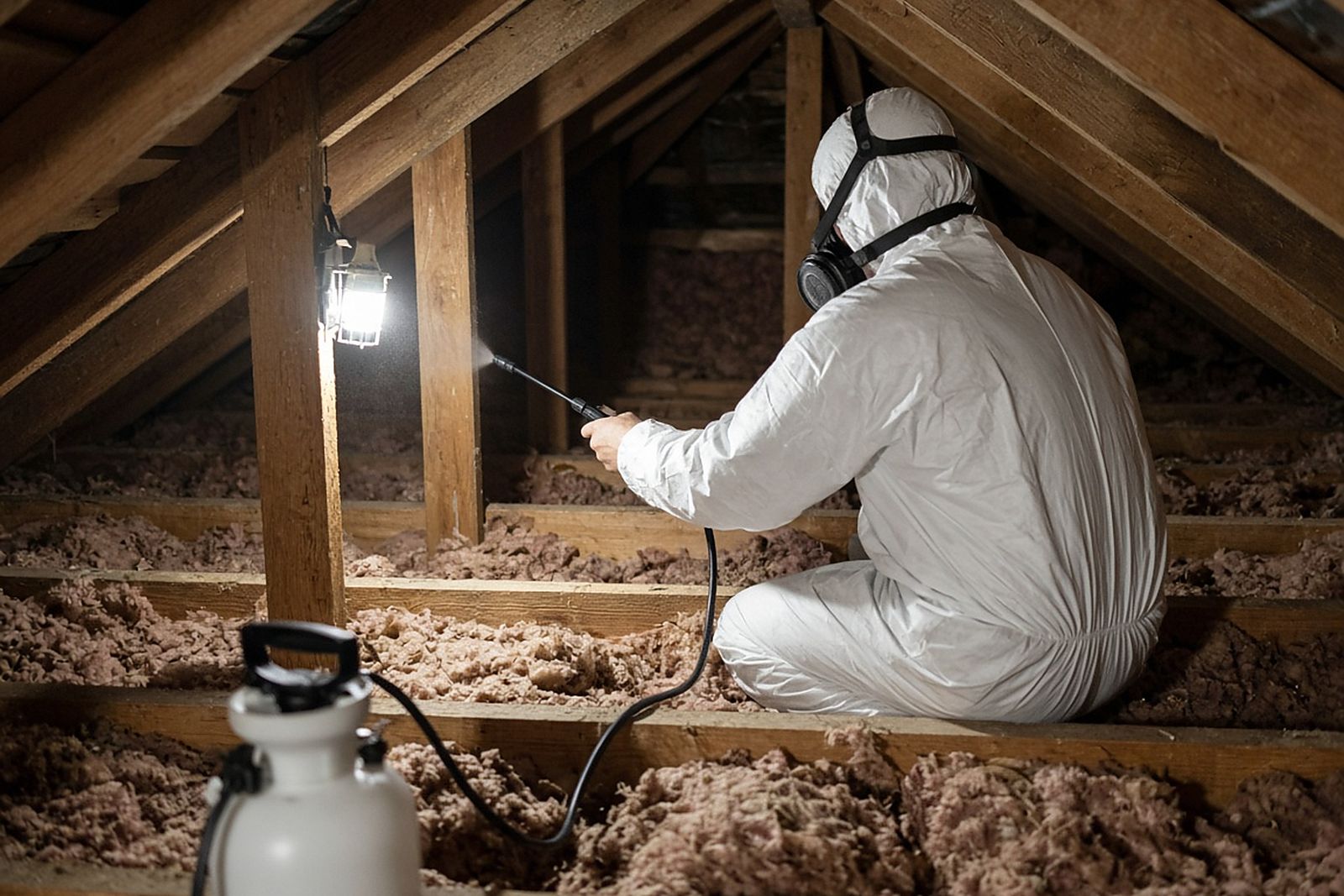
That is why technique comes before gear. Sweeping or vacuuming dry droppings, urine, or nesting material puts those particles straight into the breathing zone. A crew that wets material with disinfectant before removing it is controlling the hazard at its source.
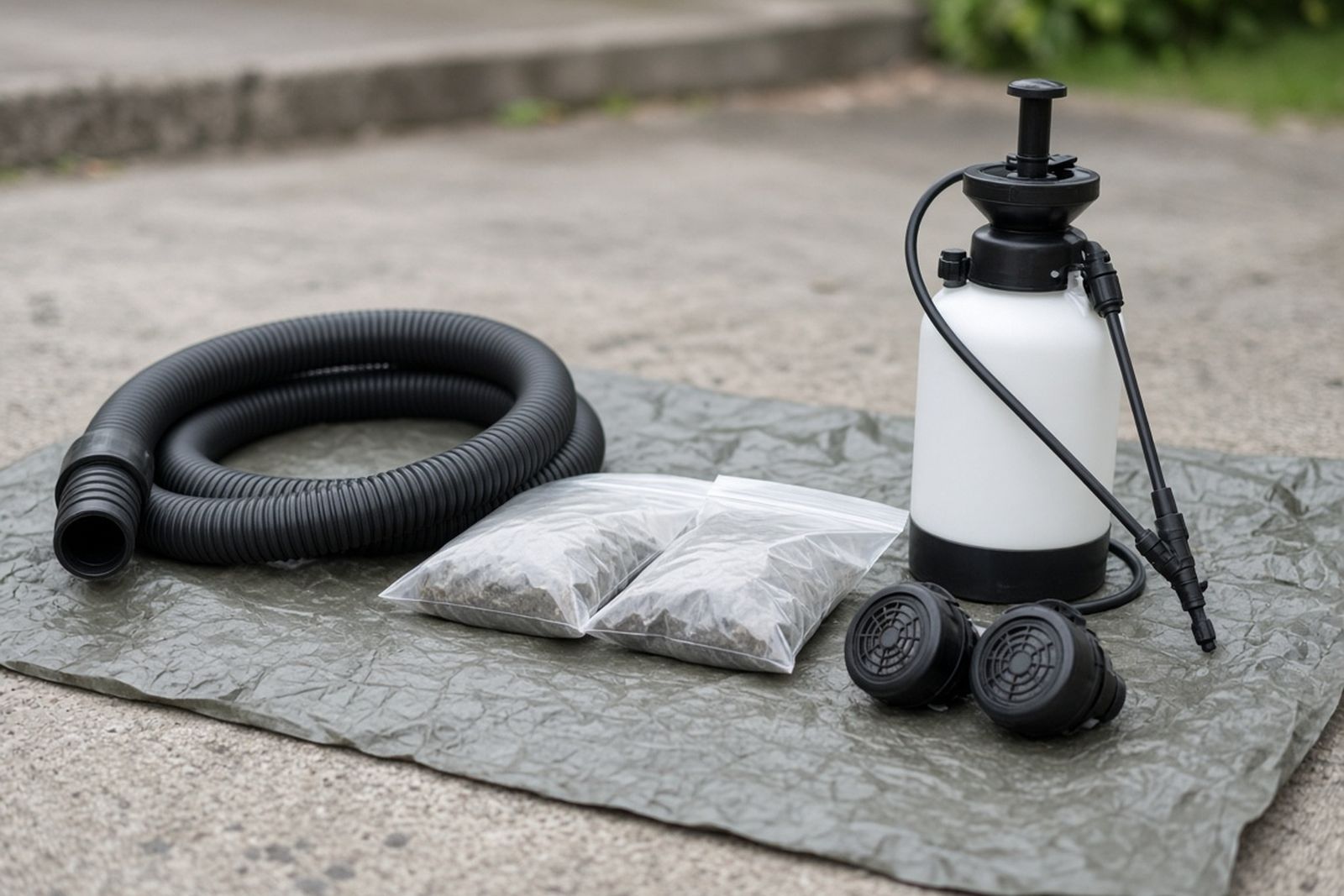
For larger jobs, respirators are part of the plan, typically an air-purifying respirator with HEPA filters worn with coveralls, boots, goggles, and gloves. Once an employer requires a respirator, OSHA's respiratory protection standard applies, bringing a written program, medical clearance, fit testing, and training.
Handing someone a mask is not a program. A respirator only protects when it fits the wearer's face, the right filter is installed, and the person knows how to put it on, check the seal, and take it off without contaminating themselves.
Under OSHA's approach, the employer evaluates the hazard, chooses the respirator type, and arranges a medical evaluation to confirm the worker can safely wear it. Each worker is fit tested with the exact make, model, and size they will use. Training covers limitations, maintenance, and storage. The program is written down and reviewed.
Facial hair, glasses, and weight changes can all affect fit. A crew member who shows up with a beard to a job that calls for a tight-fitting half mask is not protected, whatever the filter rating says. When you talk with a provider, ask whether its technicians are fit tested and how often.
Disinfectants and hazard communication
Rodent cleanup relies heavily on disinfectants, usually a bleach solution or an EPA-registered product. Those chemicals are hazards in their own right. Bleach can irritate eyes, skin, and lungs, and it reacts dangerously with ammonia and acids. Some registered disinfectants have their own label warnings.
OSHA's hazard communication rules expect employers to keep safety data sheets for the chemicals workers use, label secondary containers, and train staff on the hazards. In practice, that means a technician mixing a bleach solution in a spray bottle should know the mixing ratio, what not to combine it with, and what to do if it splashes into an eye.
Product labels also carry legal weight. Using a disinfectant in a way its label does not allow can create both safety and compliance problems. A good crew follows the label for dilution, contact time, and surfaces.
How does the General Duty Clause cover hantavirus risk?
When no specific standard addresses a hazard, OSHA can rely on the General Duty Clause, which requires employers to keep workplaces free of recognized hazards likely to cause death or serious harm. Hantavirus fits that description in areas where it is known to occur.
The seriousness is well established. According to the CDC in 2024, about 35 percent of hantavirus infections reported in the United States since 1993 resulted in death. Infections are uncommon, but the outcomes are severe enough that a responsible employer plans for the risk rather than hoping it does not come up.
In practice, that planning looks like the rest of this article: wet cleaning instead of sweeping, ventilation before entry, respiratory protection for heavy contamination, and training that explains why each step matters.
When your own staff find droppings
Many workplace encounters with rodent debris are not planned cleanups. An HVAC technician opens a return plenum and finds a nest. A warehouse worker moves a pallet and uncovers a line of droppings. A maintenance tech pulls a ceiling tile in a break room. These moments are where informal habits, like grabbing a broom or a shop vacuum, can create the very exposure the rules are meant to prevent.
A simple written procedure helps. It can tell staff to stop, leave the area, and report what they found; describe what counts as a small spot cleanup they are trained to handle; and name the point at which a contractor is called. Small cleanups still call for gloves, a disinfectant soak before wiping, and bagging of waste, and staff should know the product they are using.
If your procedure calls for any employee to wear a respirator, even occasionally, the respiratory protection requirements come along with it. Some employers choose to keep in-house tasks limited to light, well-ventilated spot cleanups for exactly that reason, and send anything heavier to a provider that already runs a full program.
Facilities managers often face this choice with a detached storage building or a long-closed room where droppings cover the shelves and nests fill the boxes. If custodial staff have general cleaning training but no respiratory protection program and no fit tests, and the amount of contamination points to respirators, standing up a compliant program usually takes longer than the space can wait.
In that situation, hiring a remediation contractor for the initial cleanout is the practical route. Ask to see its respiratory protection program and training records before work begins. Afterward, train a small number of staff on routine prevention and small-scale cleanup, set a rule that heavy contamination triggers a call to the contractor, and add a short section on rodent debris to your written safety procedures.
What should you ask a provider about worker safety?
Even as a homeowner, you have good reason to ask how a company protects its crew. Firms that take worker safety seriously tend to be careful with your property, your family, and your air as well.
Listen for detail rather than slogans. A provider that can explain when it uses respirators, how it avoids stirring up dust, and what disinfectant it plans to use has thought the job through.
It is also fair to ask how the company handles a worker who feels unwell after a job. A provider that encourages technicians to report symptoms and seek medical care, and that tells them to mention rodent exposure to their clinician, is treating the risk with appropriate seriousness.
- Do your technicians wear respirators on jobs like mine, and are they fit tested?
- Do you have a written respiratory protection program?
- What disinfectant will you use, and can I see its label and safety data sheet?
- How do you remove droppings and nesting material without sweeping or vacuuming dry?
- How do you keep contamination from spreading to other parts of my home?