Short answer
DIY rodent cleanup can be reasonable for a small number of droppings in an open, ventilated area, using gloves, a disinfectant soak, and paper towels, never a broom or vacuum. Call a professional for heavy infestations, nests, soiled insulation, attics, crawlspaces, closed buildings like cabins and sheds, or households with someone at higher health risk. Professionals also seal entry points so the problem stays solved.
Can you clean up rodent droppings yourself?
Often, yes. A handful of mouse droppings in a kitchen cabinet or along a garage wall is a common household problem, and public health agencies publish guidance so homeowners can handle it safely. The trick is doing it the right way and recognizing when a job has grown beyond what that guidance is meant to cover.
The main hazard in rodent cleanup is airborne particles from dried urine, droppings, and nesting material. Hantavirus is the most serious concern in North America, though it is rare. Rare is not the same as impossible, which is why the method matters even for small cleanups.
Beyond infection, rodent allergens affect many households, and the damage rodents cause to insulation, wiring, and ductwork can be significant. Those factors shape the DIY versus professional decision as much as the droppings themselves.
A safe DIY cleanup, step by step
Start by ventilating. The CDC advises opening doors and windows and leaving the area for 30 minutes to ventilate before cleaning up rodent droppings. Use that time to gather supplies: rubber or nitrile gloves, a disinfectant or a fresh bleach solution mixed according to public health guidance, paper towels, and sealable plastic bags.
When you return, do not sweep or vacuum. Spray the droppings, urine spots, and any nesting material until they are thoroughly wet, then wait for the disinfectant's full contact time. Pick up the material with paper towels, place it in a bag, and seal it. Then disinfect the surface again and wipe it clean.
Bag the used towels and gloves, seal the bag inside a second bag, and dispose of it with household trash unless your local rules say otherwise. Wash your hands thoroughly with soap and water. Launder any clothing that may have touched contaminated material.
- Ventilate the space before you begin.
- Wear gloves and never sweep or vacuum dry droppings.
- Soak everything in disinfectant and wait the full contact time.
- Lift material with paper towels, double-bag it, and wash your hands.
When a job is too big for DIY
The line is usually crossed when contamination is heavy, widespread, or in a hard-to-reach space. Signs include droppings along many runways, multiple nests, strong urine odor, dead rodents, or droppings found across several rooms or floors.
Location matters as much as quantity. Attics, crawlspaces, wall cavities, and ductwork are cramped, poorly ventilated, and hard to clean without disturbing material. Closed buildings such as cabins, sheds, barns, and storage units that have been shut for months are also higher risk because droppings accumulate and air stays still.
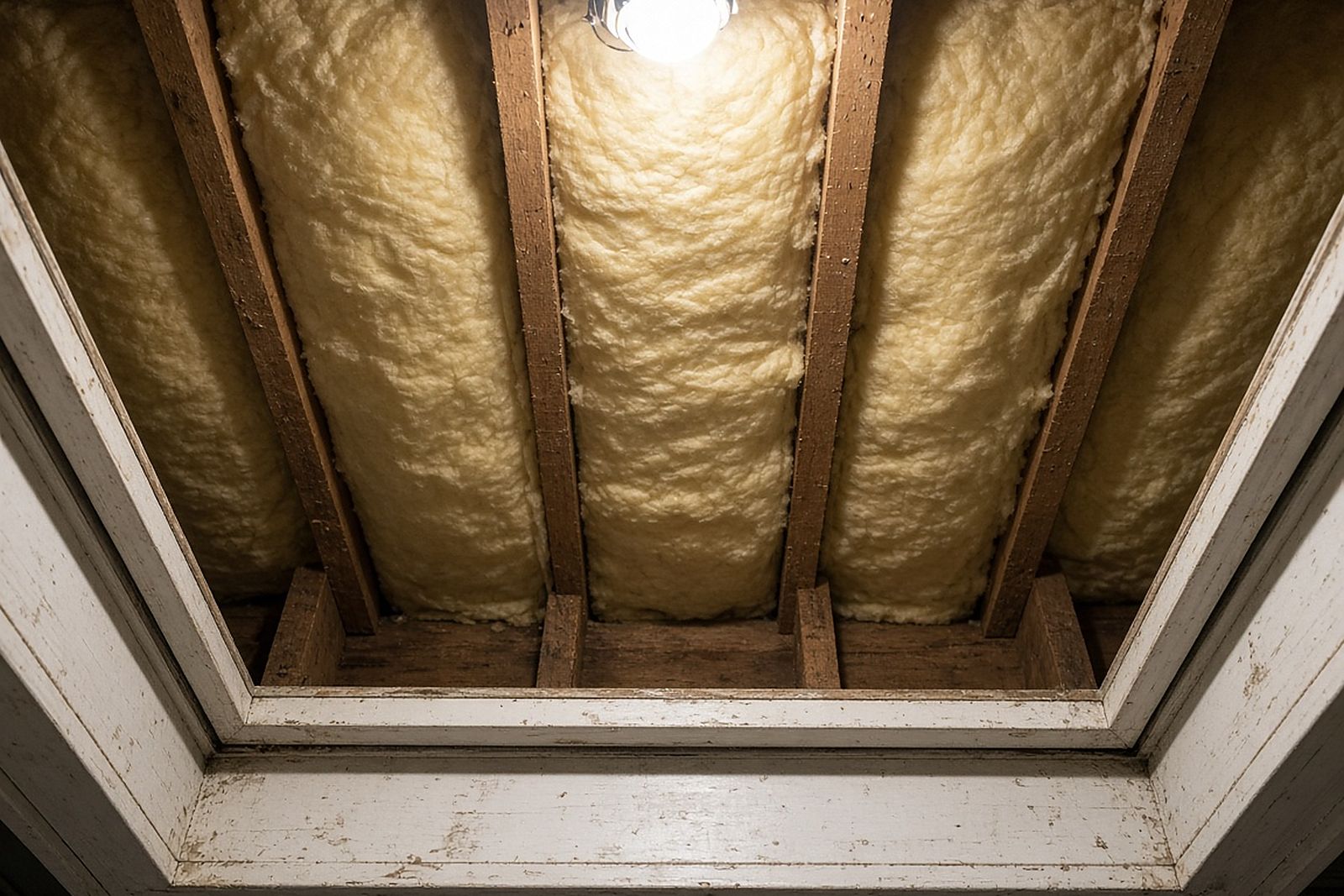
Insulation is another turning point. Rodents nest and urinate throughout insulation, and removing it safely requires specialized equipment. Spraying disinfectant onto heavily soiled insulation rarely reaches deep enough and can compress the material.
Finally, consider who lives in the home. If anyone has asthma, a weakened immune system, is pregnant, or is elderly, the case for professional help grows stronger.
Allergens deserve their own line in the decision. Mouse allergen is more widespread than many people realize, and for anyone with asthma or allergies it can matter as much as the infection risk.
For households with asthma or allergies, the goal is not only removing visible droppings but reducing allergen levels over time. That may involve thorough wet cleaning of hard surfaces, laundering fabrics, HEPA vacuuming after disinfection, and addressing contaminated insulation or ductwork. Professionals can plan this more comprehensively than a one-time DIY cleanup.
If someone in your home has asthma that worsens after rodent activity, mention it to both your healthcare provider and the remediation company.
What are the most common DIY mistakes with rodent droppings?
The most frequent mistake is reaching for a broom or a shop vacuum out of habit. It feels like the fastest way to clear a garage floor, but it is the one step every public health source warns against, because it lifts dried material into the air right at face level.
The second is spraying and wiping immediately. A quick mist followed by an instant wipe does not give the disinfectant time to work. Patience through the full contact time is what turns a cleanup into disinfection.
The third is handling a dead rodent or a nest bare-handed or with a single thin glove, then touching the face. Double gloves, a sealed bag, and immediate handwashing prevent that.
The fourth is stopping at the visible mess. Droppings in a drawer often mean droppings behind the drawer, under the appliance, and along the wall inside the cabinet base. Check the surrounding areas before you call the job finished.
- Never sweep or vacuum dry droppings.
- Let disinfectant sit for the full label time.
- Double-glove for nests and dead rodents.
- Check behind and beneath the obvious spots.
What professionals bring
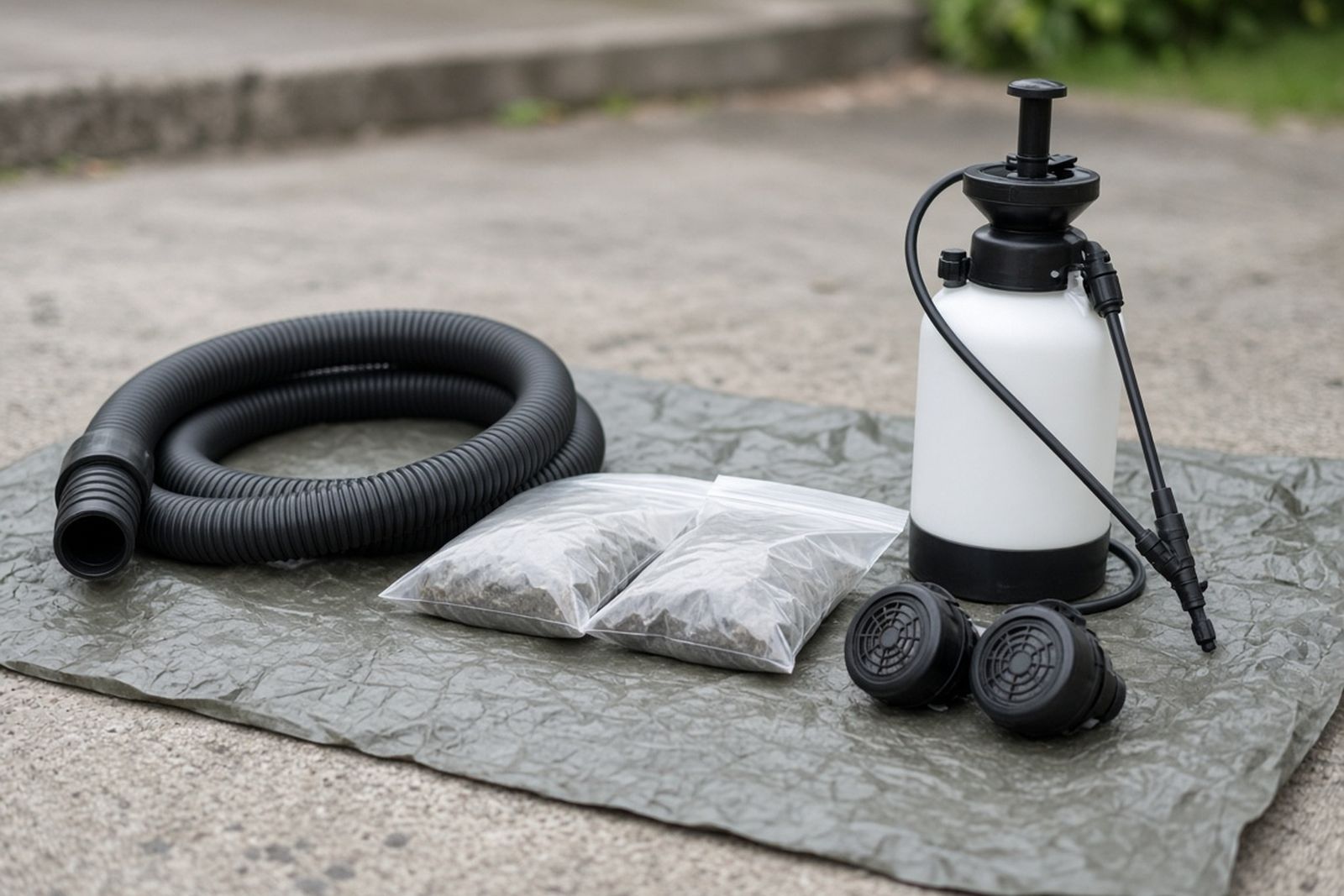
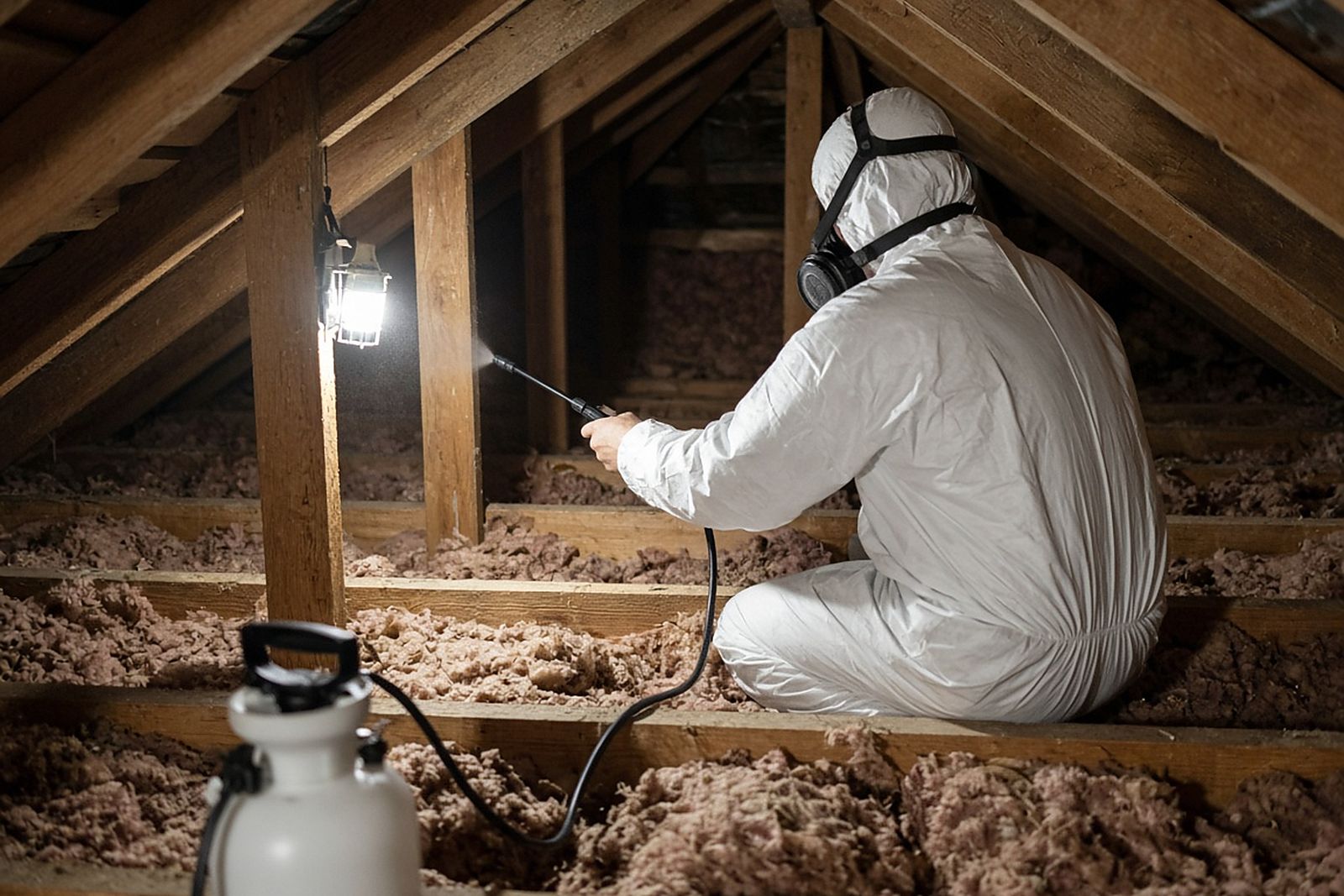
Professionals bring respiratory protection fitted to each worker, typically a half-mask or full-face respirator with HEPA filters for heavy jobs, along with disposable coveralls, goggles, and boot covers. They know how to put on and remove this gear without contaminating themselves.
They bring low-pressure sprayers that wet material thoroughly without blasting it apart, containment supplies to seal off attics and crawlspaces from living areas, and sometimes negative air machines that pull air through HEPA filters and exhaust it outside. For insulation removal, they use high-capacity vacuum systems that deposit material into sealed bags outside the home.
They also bring inspection tools: bright lights, UV flashlights that help reveal urine trails, and cameras for looking inside walls and ducts. Those tools help find the full extent of the problem, which is often larger than what homeowners see.
Why is exclusion the part DIY most often misses?
Cleaning up after rodents without sealing their entry points is only a temporary fix. New rodents follow scent trails to the same gaps and the problem returns. Many DIY cleanups fail not because the cleaning was poor but because the rodents simply came back.
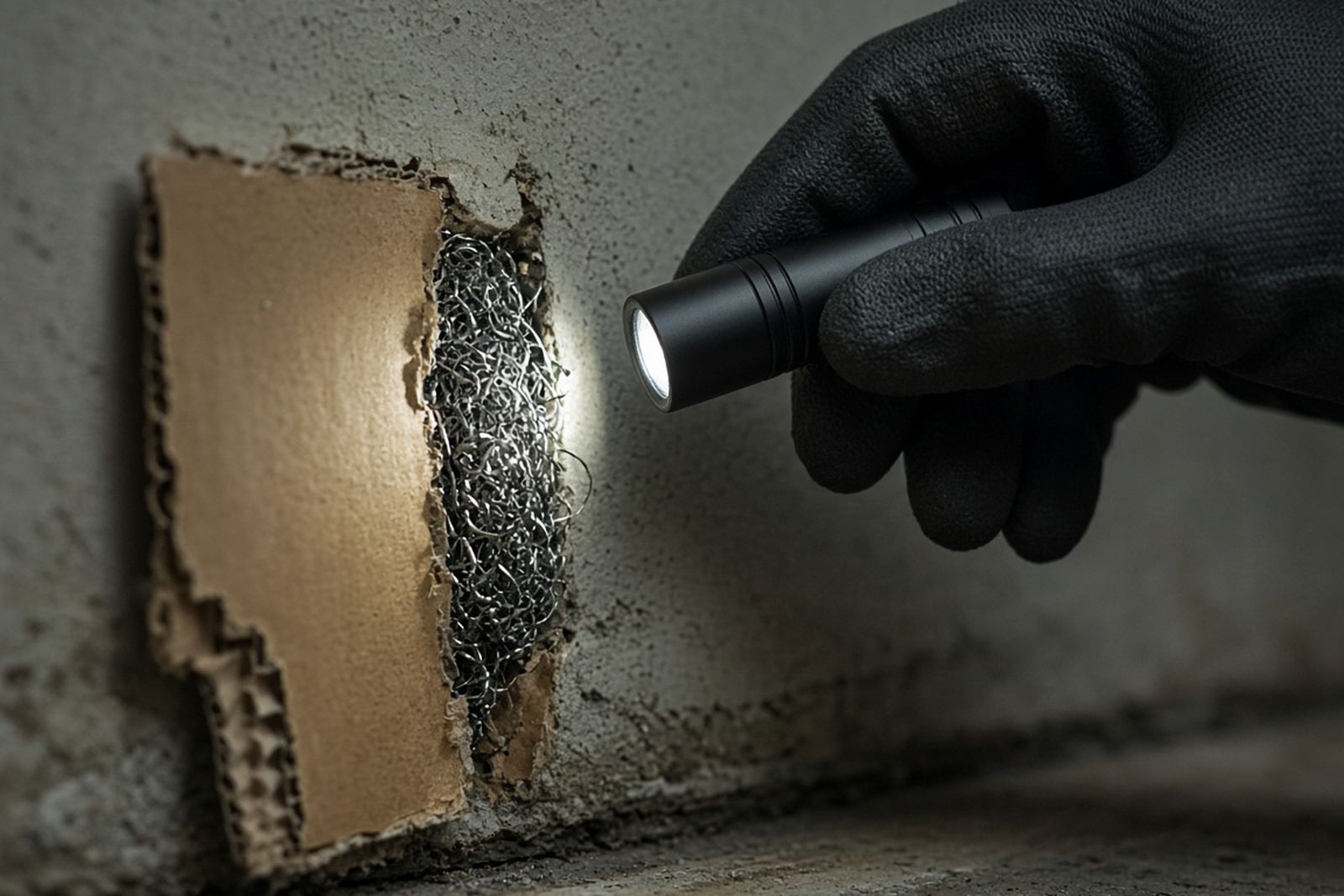
Professionals inspect the exterior for gaps around pipes, vents, rooflines, foundation cracks, and doors. They seal them with materials rodents cannot chew through, such as metal mesh, hardware cloth, sheet metal, and mortar. Expanding foam or caulk alone, which many homeowners use, can be gnawed through.
Some homeowners handle exclusion well themselves, especially for obvious gaps at ground level. Roofline and attic gaps are harder and often require ladders and experience. Rules vary by state and county; verify with the local authority whether pest control work in your area requires a licensed applicator, particularly if baits or pesticides are involved.
Small job vs large job, and a quick test
A small job looks like a dozen or so mouse droppings on a pantry floor, with no nest, no strong odor, and a pantry that opens into the kitchen. Open the windows, leave for half an hour, return with gloves and disinfectant, soak the droppings, wipe them up with paper towels, double-bag everything, and disinfect the shelves. Then seal the gap where a pipe enters the wall with metal mesh and sealant, and set a few snap traps to confirm nothing else is around.
A large job looks like an attic covered in droppings, matted and stained insulation, and several nests in the eaves, often discovered after a home purchase. Add a household member with asthma and the answer is clear. A professional crew would inspect the full attic and exterior, trap remaining rodents, seal roofline gaps, set up containment at the attic hatch, remove the soiled insulation with a sealed system, disinfect and deodorize the attic, and install new insulation.
The first is small, open, and accessible. The second has heavy contamination, insulation, a confined space, and a vulnerable household member, which is exactly where professional help is worth it.
Whatever you choose, watch for symptoms in the weeks after exposure. If you develop fever, muscle aches, fatigue, or breathing difficulty after cleaning up after rodents, contact a healthcare provider promptly and mention the rodent exposure.
Most real jobs fall somewhere between, so ask a few questions before you pick up a single paper towel. If any answer is yes, call a professional or at least get an inspection before you proceed.
- Are there nests, dead rodents, or droppings across many areas?
- Is the contamination in an attic, crawlspace, wall, or duct?
- Is insulation soiled or matted by rodent activity?
- Has the building been closed up for a long time?
- Does anyone in the household have asthma or a weakened immune system?
- Do you know where the rodents are getting in and how to seal it?